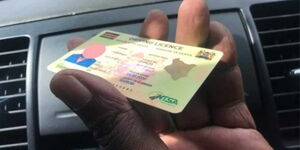

Have you ever wondered what happens to your driving record each time you commit or avoid a traffic offence? Unbeknownst to many, there is an elaborate points system within the National Transport and Safety Authority (NTSA) portal which silently tracks your nuances on the road.
This system, known as the Demerit Points System, assigns points to every licensed driver in Kenya, starting them off with a maximum score of 20 clean points.
It is worth noting that these points are not rewards but rather a measure of how responsibly you conduct yourself on the road. The fewer infractions you commit, the better your score.
Whenever you violate a traffic rule, and the offence is officially recorded, NTSA deducts a specific number of points from your record. This all depends on the severity of the offence.

The core purpose of this system is to encourage safe and responsible driving by creating a transparent and measurable way to monitor drivers' behaviour in the country.
Points are deducted in categories: minor, moderate and serious infractions, with each category carrying a pre-determined number of points reflecting the risk associated with the offence.
Minor infractions like failure to wear a seatbelt, minor speeding or using a phone while driving typically carry small deductions of two to four points.
Moderate infractions, such as dangerous overtaking and ignoring traffic signals, can bear bigger penalties if recorded by the NTSA and can lead to a quick depletion of a driver's score.
A quick spot check by Kenyans.co.ke also established that serious infractions can carry the maximum penalty of 20 points from a single incident. This can include drunk driving, reckless driving, which causes injury or death by dangerous driving, among others.
What happens when 20 Points Are Depleted
When the points begin to drop, NTSA will monitor the total, and once the deduction reaches a threshold, there are specific actions which will be triggered.
In the event a driver accumulates enough infractions to cost him 10 points or more within a year, they may be required to undergo a mandatory driving refresher course to correct unsafe habits and restore confidence in the driver's ability to operate a vehicle safely.
If one depletes all their points to zero within a year through infractions, the NTSA has the authority to suspend a license for a specific period. Suspension effectively means the driver is legally barred from operating any vehicle on Kenyan roads until they are compliant.
How Points are Restored
Points are typically restored partially on an annual basis, particularly for drivers with clean records during a review period.
If a driver successfully undergoes NTSA-recommended corrective training, such as defensive driving or a mandatory refresher course, they can have some points restored as part of their rehabilitation.
One classic example of the loss of points occurred on Tuesday, December 9, when the NTSA announced the suspension of licenses of 62 drivers across six different SACCOs.
These drivers will now be required to undergo re-testing to confirm their competence and suitability to operate on Kenyan roads.