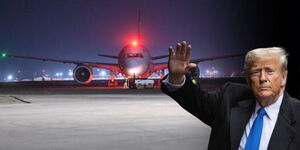

U.S. President Donald Trump has announced a fresh directive pausing all immigration applications, including green card and citizenship processing, for immigrants from 19 non-European countries.
In the directive, the U.S. imposed new restrictions on several African nations, including the neighbouring Somalia, Burundi, Chad, the Republic of the Congo, Equatorial Guinea, Eritrea, Libya and Sudan.
Kenya, which had been the subject of speculation over a possible inclusion, was spared, a development that coincided with President William Ruto’s arrival in the U.S. on Trump’s invitation.
The order cited national security and public safety concerns, continuing a trend of tightened travel controls introduced earlier in the year.

The move comes amid reports that Trump is considering expanding an earlier June order that had restricted travel from 19 countries to as many as 30. This has raised concerns among immigration stakeholders about possible wider-reaching implications in the weeks ahead, according to the Guardian.
According to Wednesday’s memorandum, the list of targeted countries includes Burma, Chad, the Republic of the Congo, Equatorial Guinea, Eritrea, Haiti, Iran, Libya, Sudan and Yemen. These were among the nations that had faced the most severe restrictions in June, including a full suspension of entries with limited exceptions.
Other countries that were subjected to partial restrictions in June also feature in the revised list. They include Burundi, Cuba, Laos, Sierra Leone, Togo, Turkmenistan and Venezuela, all of which will now undergo heightened scrutiny under the new measures.
The updated policy places an immediate hold on all pending applications from immigrants originating from the affected countries.
It further mandates a thorough re-review process, which may include a fresh security interview or, where necessary, an additional re-interview to reassess potential national security or public safety threats.
The memorandum referenced several recent incidents allegedly linked to immigrants, including the national guard attack in the U.S., which the administration used to justify the need for increased vetting and broader oversight.
Meanwhile, President Ruto is in the U.S to witness the signing of the historic DRC-Rwanda Peace Agreement. The signing event will be attended by Rwandan President Paul Kagame and Félix Tshisekedi of the Democratic Republic of Congo, the two figures at the centre of the deal.
During the Washington visit, Ruto is also set to pursue strategic interests in trade, investment, health cooperation and security.
At the same time, the Head of State will also witness the signing of the Kenya-U.S. Health Cooperation Framework, which transitions a 25-year partnership into a sustainable government-led model aimed at strengthening Universal Health Coverage (UHC).