
The Ministry of Lands, Public Works, Housing, and Urban Development has appointed several ad hoc committees to oversee the delineation of boundaries for proposed municipalities and urban areas in Embu, Turkana, and Wajir counties.
In a series of notices published in the Kenya Gazette on December 11, the Cabinet Secretary for Lands, Alice Wahome, stated that she made the appointments under Section 4A(2) of the Urban Areas and Cities Act, effective as of July 1, 2025.
In Embu County, Wahome constituted separate committees for the proposed municipalities of Siakago, Runyenjes, and Kiritiri.
Each committee is to be chaired by a representative of the Independent Electoral and Boundaries Commission (IEBC) and includes officials from the Ministry of Lands, Public Works, Housing and Urban Development, the ministries responsible for Environment and Agriculture dockets, and relevant county departments, as well as nominees from the Kenya Institute of Planners and the Institute of Surveyors of Kenya.

In the proposed Siakago municipality, the CS appointed Irene Kyatu (IEBC) as the chairperson.
She would be leading a committee consisting of, among other members, Mutua Mutisya (Ministry of Lands), Simon Odawa (Environment), Kariuki Peter Kuria (Agriculture), Elizabeth Mutisya (Kenya Institute of Planners), and Christopher Kinyua (Institute of Surveyors of Kenya).
In Turkana County, the CS appointed an ad hoc committee to delineate the boundaries of Lodwar and Kakuma municipalities.
Wajir County also saw the appointment of a committee to handle the delineation of boundaries for the urban areas of Bute, Habaswein, Hadado, Eldas, Tarbaj, Khorof Harar, and Griftu, as part of efforts to formalise their urban status.
According to the gazette notices, the committees are tasked with reviewing and proposing boundaries in line with legal, planning, and environmental considerations, a key step in the establishment and upgrading of municipalities and urban areas.
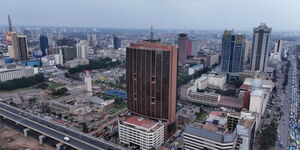
The move aims to support orderly urban development, enhance service delivery, and strengthen urban governance in the affected regions as the government advances its urbanisation agenda.
For an urban centre to become a municipality, a minimum resident population of at least 70,000 is required based on the latest census results.
It should also have adequate infrastructure, such as roads, markets, and fire stations, with sufficient space for future expansion.
Already, the IEBC has been in the eye of the storm over the fate of 40 constituencies that are in limbo.
IEBC was expected to conduct its last boundary review by March 2024, which was the constitutional 12-year maximum limit after the previous review in 2012. Delays in reconstituting the IEBC halted the process.
In the last review, 27 constituencies that fell short of the population quota were "protected" through a political decision, deferring their fate to the subsequent review.
The boundary review is necessary to ensure fair and equitable representation in Parliament and County Assemblies, as well as the fair distribution of national resources, which is a constitutional requirement.