
Rising water levels in Turkana County have pushed crocodiles dangerously close to human settlements, forcing the Kenya Wildlife Service (KWS) to kill a predatory crocodile that had been terrorising residents near Lodwar town.
The crocodile was shot at Kakuenyang, a water point along River Kakwa, just a few kilometers from Lodwar town, where locals regularly take their livestock to drink.
KWS County Warden for Turkana Chege Elijah revealed in an exclusive interview with Kenyans.co.ke that the reptile had killed several goats and posed a serious threat to human life in the area, a crisis that has been going on in the area for a while.
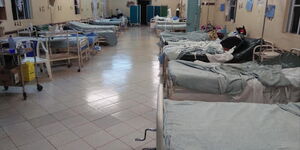
The intervention came days after a crocodile attacked a resident in Kalokal, leaving him injured and requiring treatment at Lodwar Referral Hospital.

"The crocodile was preying on the goats and other domestic animals. It was a very huge threat even to humans," Chege Elijah explained.
KWS evacuated the injured victim from Kalokal Dispensary to Lodwar Referral Hospital, where he continues to receive medical care.
The warden revealed that rising water levels have displaced crocodiles from their natural habitats, bringing them into direct contact with communities that depend on fishing for survival.
He further revealed that several areas along the shoreline have been identified as crocodile attack hotspots, including Loangak, Longetch, Namukose, and Kerio Delta areas in Turkana County.
"These attacks are happening because of the rising water levels. So crocodiles have come close to humans. They've been displaced from their habitats," Chege Elijah noted.
He added that the current breeding season has made the situation more dangerous, as crocodiles become particularly aggressive during this period.
KWS has launched aggressive awareness programs across all hotspot areas to educate communities about crocodile behaviour and safety measures.
The service emphasised its dual mandate of protecting both wildlife and human populations. KWS maintains that killing wildlife only becomes necessary when animals pose direct danger to human life.
"While our primary role is wildlife conservation, we must act when animals pose direct danger to human life. KWS is committed to balancing protection of both wildlife and communities living alongside them,” Chege Elijah stressed.
Turkana residents, who rely heavily on fishing and livestock as their primary sources of livelihood, now face heightened risks when accessing water points.
Chege Elijah highlighted that KWS continues to monitor the situation closely as rising water levels persist in the region.