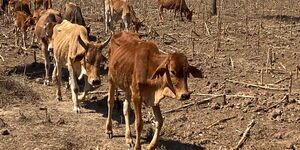

The country is expected to experience hotter and drier than usual conditions over the next three months, the Kenya Meteorological Department has warned.
According to the weatherman, the October–November–December (Short Rains) season is expected to end between the first and fourth weeks of December, with occasional rain expected in some parts of the country.
Acting Director of Meteorological Services Edward Muriuki also clarified that the dry and hot conditions are expected to intensify between December and February.
"Temperatures are expected to be warmer than average over the whole country, with prolonged periods of heat likely to intensify daytime temperatures, elevate nighttime minimums, and contribute to generally hotter-than-usual conditions throughout the month," Muriuki said.

Muriuki explained that factors such as La Niña and a negative Indian Ocean Dipole (IOD) are likely to be responsible for the drier and hotter-than-normal conditions expected in the country during this period.
La Niña is a climate pattern in the Pacific Ocean that affects weather around the world, characterised by cooler-than-normal ocean temperatures across the central and east-central Pacific. This contributes to the drier-than-normal conditions expected in the region.
The IOD, on the other hand, is a climate phenomenon in the Indian Ocean characterised by differences in sea surface temperatures between its western and eastern regions. These differences influence weather patterns in surrounding countries such as East Africa, India and Australia.
When the Western Indian Ocean is warmer than the Eastern Indian Ocean, it is called a positive IOD and usually brings more rain to East Africa and drier conditions to Indonesia and Australia. When the opposite happens, East Africa experiences dry conditions.
"La Niña typically brings drier-than-normal conditions to parts of East Africa, though its impact can vary. The negative Indian Ocean Dipole (IOD) is still active, but it has been getting weaker over the past three weeks," Kenya Met said.
"For the week ending 23 November, the IOD index was −0.60 °C. Climate models indicate that the IOD is likely to return to neutral conditions in December," It added.
For the next three months, farmers have been advised to implement water conservation practices such as mulching and ensure they store enough feed and maintain water points.
Residents, especially those living in Arid and semi-arid regions, have been urged to implement water-saving measures, prioritize domestic water supply, and monitor water storage facilities to ensure that they are well prepared for a water shortage that may hit during this period.
Residents living in areas that might experience isolated heavy rainfall, particularly in Kisii, Kisumu, Nandi, Kakamega, and Narok Counties, as well as on Mt. Elgon and its surrounding areas, have been cautioned against driving or walking on flooded areas.
Public Health advisories have been further advised to stay alert for heat stress and vector-borne diseases across the country.
"Occasional rainfall may cause slippery roads in areas expected to receive near-normal rainfall, increasing the risk of accidents. Localized flash floods could create transport challenges, particularly during rush hours and in areas prone to impassable roads," Kenya met stated.