
The Kenyan Government has signed a landmark KSh 40.4 billion Public-Private Partnership (PPP) agreement to strengthen Kenya’s national power transmission network, boosting grid stability, supporting renewable energy integration, and driving economic growth.
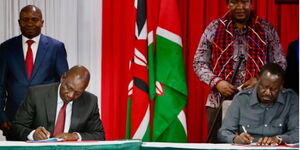
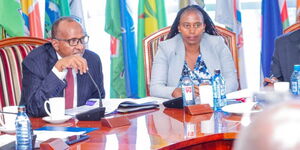
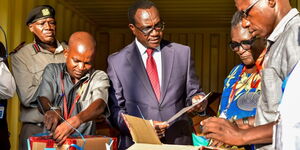
The deal, signed on Monday, December 15, between the Kenya Electricity Transmission Company Limited (KETRACO) and Africa50, along with PowerGrid Corporation of India, was witnessed by National Treasury Principal Secretary Dr Chris Kiptoo, alongside several senior government officials.
Reading remarks on behalf of Treasury Cabinet Secretary John Mbadi, Kiptoo said the project reaffirmed the Government’s commitment to accelerating economic development through strategic investments in energy infrastructure anchored on sound policy and disciplined planning.
He noted that the project would strengthen Kenya’s transmission backbone, which is critical for national resilience, regional development, and sustained economic expansion, while advancing the delivery of reliable, affordable, and sustainable electricity to households, businesses, and public institutions.

“Through PPPs, the Government attracts capital and technical expertise while safeguarding fiscal discipline and national priorities,” Kiptoo stated.
The KSh 40.4 billion project that will be fully financed, implemented, operated, and maintained by the private sector, will also involve the construction of two high-voltage transmission corridors and associated substations.
The ministry states that the project will establish new routes to enhance system stability, reduce technical losses and load shedding, and facilitate the integration of renewable energy into the national grid.
One of the corridors is the 400 kV Lessos–Loosuk transmission line, which will traverse Samburu, Baringo, Nandi, and Elgeyo Marakwet counties.
The second corridor is the 220 kV Kibos-Kakamega-Musaga line. It will serve Kisumu, Vihiga, and Kakamega counties, with substations at Kibos, Kakamega, and Musaga.
It is expected to improve the high-voltage power supply to Kakamega and significantly reduce technical losses and load shedding in Western Kenya.
The shift to PPPs was driven by increasing constraints in public financing and the need to modernise the national grid to meet growing electricity demand.
KETRACO had earlier awarded the deal to the Adani Group, a deal that President William Ruto cancelled in November 2024 due to corruption concerns as well as widespread public disapproval.
Before signing the agreement on December 15, KETRACO held numerous internal and external stakeholder engagement forums and public participation sessions to ensure social acceptability and transparency.
The goal of the PPPs is to ensure a reliable and adequate national grid, facilitate regional power trade, and increase the penetration of clean renewable energy sources as the country gears towards the First World dream.
The Government insisted that all project-affected persons will receive prompt and fair compensation for land, crops, structures, and income loss, alongside livelihood restoration measures aimed at safeguarding community stability.