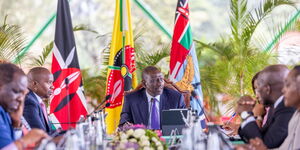

The Cabinet has approved a new National Energy Policy and an update to the National Petroleum Policy, in what officials described as a major step toward Kenya’s goal of becoming a modern, industrialized economy.
The National Energy Policy is intended to guide sector reforms and accelerate access to modern, reliable, and sustainable energy as the country pushes to become an industrialized, middle-income economy.
This policy will promote renewables in accordance with Sustainable Development Goals (SDG) to ensure private sector participation and encourage climate-resilient development under the Bottom-Up Economic Transformation Agenda (BETA).
As such, the policy will provide a comprehensive framework to address long-standing challenges in the energy sector, such as low electricity access, reliance on traditional biomass, unreliable supply, limited investment, and climate risks.

On the other hand, the National Petroleum Policy is an update on the 2004 framework that aims to strengthen governance, attract investment, and enhance energy security.
The revised policy is in line with the constitution and recent oil discoveries in Northern Kenya and seeks to strengthen governance and attract new investment.
In addition, the policy will promote value addition and LPG uptake, improve revenue management, and safeguard the environment.
The Cabinet also gave the nod to the Livestock Value Chain Support Project, which aims to boost dairy productivity, reduce post-harvest losses and generate more income for the farmers.
Also Read: Cabinet Approves New National Security Command Centre to Replace Outdated Surveillance System
The project will achieve these expectations by strengthening genetics, feeds and fodder production, expanding cold-chain infrastructure, and supporting farmer organizations.
These cabinet approvals serve to advance the Kenya Kwanza Manifesto’s investment-led growth agenda.
The decisions come just days after President William Ruto likened his development intentions to Singapore, where he cited the Southeast Asian nation’s transformation story as a model for Kenya’s industrialization.