
Governor Johnson Sakaja is under scrutiny over Nairobi County's excessive expenditure on salaries at the expense of development and essential services.
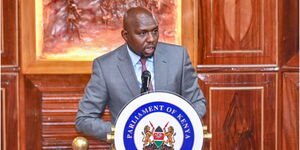
This was after the Controller of Budget, Margaret Nyakang'o, on Sunday, December 22, raised an eyebrow at how the county spent 69 per cent of its revenue on salaries alone within three months.
According to her report, Nairobi City County spent 69 per cent of its revenue, about Ksh4.7 billion, on staff compensation between July and September. This raised an issue on the county's contract allocation and casual workers' hiring practices.
During the three months under investigation, the county received Ksh6.6 billion, comprising Ksh3.4 billion in equitable share from the National Treasury and Ksh2.5 billion in own-source revenue. Hospitals running under the county government accounted for Ksh470 million, while parking fees, building permits, and business permits generated hundreds of millions more.

Despite receiving this amount, the county spent Ksh5.3 billion on recurring expenditures, which included salaries and allowances, and Ksh202.2 million on development projects.
Employee compensation alone stood at Ksh4.79 billion, with the health sector accounting for Ksh2.03 billion, representing 42 per cent of the total wage bill. The Nairobi County Assembly also spent Ksh12.7 million on committee sitting allowances for 124 MCAs during the period.
The report further raised concerns about the rise in operational and maintenance costs, which jumped by 207 per cent compared to a similar period in the previous financial year. More than half of the development expenditure was absorbed by the environment and sanitation docket, including the procurement of heavy machinery costing KSh 150 million.
Previously, Nairobi County emerged as the largest contributor to county pending bills nationwide, owing contractors and suppliers Ksh82.8 billion.
Out of this amount, Ksh62.3 billion is historical debt inherited from previous administrations, while Sh20.5 billion has accumulated under the current administration over three years.
Furthermore, the county had also been flagged as the county with the highest revenue arrears, accounting for 43 per cent of all county arrears nationally, amounting to Ksh67.01 billion.
The situation has been worsened by poor land rate compliance, with only 50,000 to 60,000 out of 250,000 land parcels actively paying rates.
Further pressure came from unremitted statutory deductions, where Nairobi owed Ksh5.25 billion in PAYE, NHIF, and NSSF, nearly half of the national total.
She, at the end, urged Governor Sakaja's administration to implement stringent payroll controls by fully processing salaries through the Human Resource Information System (HRIS) and ensuring all staff are issued with Unified Personnel Numbers (UPNs).
She also called on the County Public Service Board to strictly regulate the hiring of contract and casual workers and adhere to approved staffing levels.