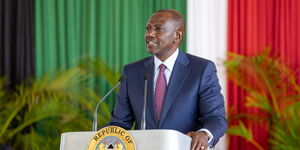

State House received Ksh7.6 billion, about 99.7 per cent of its recurrent expenditure allocation in the first six months of the 2025/2026 financial year, even as the government struggles with a major revenue shortfall.
A report published by the National Treasury on Friday, December 19, showed that between July and November this year, State House had already received Ksh7.6 billion, nearly all its estimated allocation.
This, despite Treasury Cabinet Secretary John Mbadi disclosing that the government is facing a massive revenue gap, with estimated collections falling far below projected figures.
According to the financial disclosure, the government had projected to raise Ksh4.43 trillion in revenue, but it collected only Ksh1.81 trillion, depicting a massive deficit in collection.

Tax, which remains the government’s main source of revenue, had been projected at Ksh2.63 trillion, but only Ksh909.8 billion was collected.
Similarly, non-tax revenue also underperformed significantly, with actual receipts standing at Ksh42.2 billion against an estimated Ksh127.6 billion.
In the statement of actual revenues against the net exchequer issues, the office of the President received only Ksh1.5 billion within the first six months, against its estimated Ksh4.5 billion allocation.
On the other hand, the office of the Deputy President also received nearly all its allocated budget after getting Ksh2.6 billion in the first six months against its allocated annual estimate of Ksh2.9 billion.
The report also revealed that the office of the Prime Cabinet Secretary received only half of its recurrent allocation of Ksh363 million, receiving only Ksh154 million within the six months.
Additionally, the figures further show marginal allocation in key institutions, including the National Police Service (NPS), the Ministry of Defence and devolution.
This follows amid repeated promises by President William Ruto to cut down on the expenditure within his administration, a pledge that now seems to lack implementation.
Key institutions within the executive arm of the government, including State House and the office of the president, have in recent years faced scrutiny for significant over-expenditure.
The latest development comes even as a section of Kenyans, particularly those in the employment sector, continue to decry high taxation by the government.
Govt Imposes Curfew in Sections of Narok County Breaking News