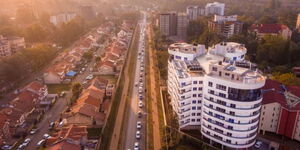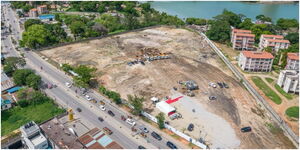

Lamu and Garissa residents have today, December 20, protested the construction of the affordable housing programme due to environmental damage and displacement claims.
In Watamu, Lamu County, residents claimed that the project threatened the existence of the town's only remaining public park.
The park was widely used as a meeting space due to the existence of neem trees, and it is also the primary point of contact when tourists visit the area.
Residents argued that cutting down the trees and putting up the houses and cutting down the trees would erode the town's reputation as a tourist destination.

"It brings me great sorrow to see what is being planned right in front of a focal point where tourists first arrive in Watamu, expecting a lovely beach holiday with welcoming people, only to be met by a block of ugly-looking flats. What a shame, what an absolute shame," a tourist stated.
"The environmental impact from the National Environment Management Authority (NEMA) has not spoken about how the buildings will be built and how the waste management will be done," one of the protesters cited.
Another resident further urged the government to consider buying land from areas such as Jacaranda, Kanani, Uyombo, Dabaso, and Gede.
Meanwhile, in Garissa, residents were protesting, carrying leaves that stated they feared eviction from a place they had occupied for decades due to phase 2 of the affordable housing project.
"Most of the people you see here have lived here for a long time, even if there is an eviction, the government should issue a notice so that people can prepare themselves," a lady stated.
They also claimed the plan was a scheme to grab public land and were appealing to the government to provide alternative land to settle.
"We won't allow them to come and evict us without considering what the law says," a furious man stated.
The Affordable Housing Programme targeted low- to middle-income earners, prioritising residents of informal settlements, Jua Kali workers, youth, and first-time homeowners, with housing options structured around different income levels.
The initiative also created employment across the construction sector, supported artisans and suppliers, waived upfront deposits for the lowest earners, and allowed participation by Kenyans in the diaspora.