
Sudan has tabled a peace deal at the United Nations Security Council outlining the necessary steps towards attaining sustainable peace in Sudan, despite cuts in humanitarian funding by the U.S. and its allies that demand an agreement between Sudan's army and the Rapid Support Forces (RSF).
At a time when Sudan’s army has stepped up attacks in West Kordofan, targeting the paramilitary Rapid Support Forces (RSF), the PM was proposing a peace plan to the UN Security Council, in which sits the United States, suggesting Sudanese cohesion.
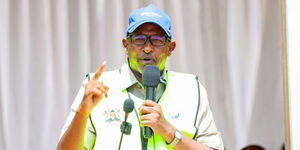
While addressing the Security Council, the Prime Minister, Dr Kamil El-Tayeb Idris, stressed that the goal of the peace plan was not military victory but an end to Sudan’s long cycle of instability.
In the peace plan, the PM outlined several steps that would ensure peace in Sudan. Dr Idris suggested an immediate ceasefire that would have the United Nations, the African Union, and the League of Arab States overseeing its sustenance.

The PM also called for the withdrawal of RSF combatants and their subsequent disarmament. The withdrawal would see the RSF militia grouped in agreed-upon camps under the joint supervision of UN, African, and Arab actors.
In addition, PM Idris suggested it was necessary to facilitate the safe return of internally displaced persons (IDPs) to their original homes, along with the voluntary return of refugees from neighbouring countries and the unrestricted flow of assistance to conflict-disturbed areas.
Moreover, the plan included the reintegration of RSF fighters into Sudanese society. However, the PM clarified that those reintegrated would be fighters not implicated in war crimes.
Dr Idris went on to propose economic reconstruction projects in Darfur and Kordofan that would afford the Sudanese economic security and earn them stability.
Lastly, the PM recommended that free and fair elections be conducted nationwide once stability was restored.
After the meeting with the UN Security Council, the PM described the plan as "realistic, doable, and enforceable."
Despite these diplomatic efforts, Sudan’s civil war represented what the United Nations describes as the world’s largest displacement crisis.
According to the UN, about 9.5 million people are internally displaced within Sudan, another 4.3 million have fled to neighbouring countries, and more than half of the population (30.4 million people) now depend on humanitarian assistance to survive.
"Our situation here is terrible. We don’t have food; we don’t have anything," decried Jamila Ismail, an IDP from El Fasher.
While aid agencies blame international donors for the situation in Sudan, as well as its continued exacerbation, donors such as the United States stated that aid given will be directed only to programmes that serve American national interests.