
Kenyans will soon have the opportunity to witness the preserved remains of one of Africa's most celebrated elephants, as part of a unique conservation initiative, according to the Kenya Wildlife Service (KWS).
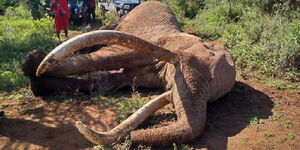
Craig, the legendary Amboseli super tusker, died at the age of 54, marking the end of an era for Kenya's wildlife heritage.
The Kenya Wildlife Service has started the taxidermy preservation of the iconic elephant as part of efforts to safeguard its legacy for future generations.
Taxidermy is the art and science of preserving an animal's body, typically a vertebrate, by stuffing or mounting its skin over a foam to create a lifelike display or a scientific specimen for museums, study, or personal keepsakes.

Super tuskers are extremely rare elephants, each bearing tusks that weigh more than 45 kilograms, with only a few known to still exist across the African continent.
Craig was born in January 1972 to Cassandra, the great matriarch of the CB elephant herd, making him one of Amboseli National Park's most distinguished residents. The letter code "CB" is the identifier used by researchers for this specific family.
His majestic tusks and gentle demeanour made him a global ambassador for wildlife conservation, attracting visitors from around the world to witness his magnificence.
According to KWS, the preservation process will involve meticulously conserving Craig's skin and physical features to create a lifelike mount that will serve educational and scientific purposes for years to come.
During his remarkable lifetime, Craig fathered numerous calves, ensuring his genetic lineage continues to strengthen elephant populations across the Amboseli ecosystem and beyond.
In a press statement, KWS revealed that the taxidermy mount will be housed at a designated facility where the public can view it, though KWS has not yet announced the specific location.
"Through taxidermy preservation, we are ensuring that his legacy endures beyond his lifetime, offering future generations a tangible connection to Kenya's rich wildlife heritage," stated Prof. Erustus Kanga, Director General of KWS.
KWS revealed that it will communicate further details regarding the timeline and location for public access to view Craig's preserved form in the coming weeks.