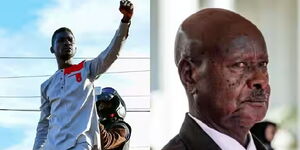

Ugandan citizens will head to the polls on Thursday, January 15, to elect a new president in a fiercely contested general election that has drawn intense regional and international scrutiny, pitting long-serving incumbent Yoweri Museveni against a united opposition led by Bobi Wine.
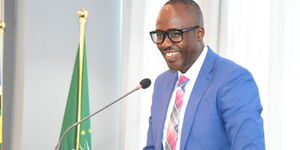
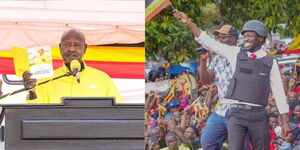
The current president, Yoweri Museveni, is facing competition from eight other aspirants, including the youthful musician turned politician, Robert Kyagulani alias Bobi Wine.
At 81, Yoweri Museveni, who has ruled Uganda since 1986, is seeking a seventh term as he contests the Thursday election.
About 21.6 million Ugandans are registered to vote and are expected to cast their ballots at roughly 50,739 polling stations nationwide, according to the Electoral Commission of Uganda, the constitutionally mandated body overseeing the polls.

Though there are concerns about possible election rigging, the election chief in Uganda had told journalists that such claims were untrue. He says the election results would be tallied and correctly announced.
The EC chairperson also stated that the law demands that the candidate who receives a 50 per cent plus one vote would ultimately be announced the winner.
The commission will use the manual form of voting, which includes queuing with identity cards and marking of ballot boxes. Every voter will mark a physical paper ballot and will place it in a sealed ballot box. Uganda will also practise secret ballot voting.
Voting will commence at 7 am and close at 4 pm, after which tallying and counting will begin at the polling stations. The figures will be recorded on a declaration of results (DR) form and will also be announced at the stations.
The forms will then be sent to district tally centres, where they will be added together and proclaimed by a returning officer, before moving the results to a national tallying centre for total compilation before formal announcement.
As in Kenya and elsewhere globally, the Ugandan election will feature political party and candidate agents, alongside local, regional and international observers overseeing the process.
Vocal Africa, a human rights group in Kenya, has submitted its intention to be included in the observer's list.
As Uganda prepares for the elections, controversies have followed the election credibility after the government on Tuesday, January 13, announced a total shutdown of the internet as the election materials and ballot boxes were being transported to various polling stations.

EPRA Announces New Fuel Prices Breaking News