
Kenya has emerged among the world’s top 10 borrowers from the International Monetary Fund (IMF), with the country ranked seventh globally in terms of outstanding credit.
According to the latest IMF data published on Thursday, Kenya’s current outstanding debt to the Fund stands at SDR 2.95 billion, equivalent to approximately Ksh519.8 billion at the prevailing exchange rate.
Kenya now falls behind only six countries globally in IMF debt with Argentina leading at Ksh7.35 trillion (SDR 41.8 billion), Ukraine Ksh1.82 trillion (SDR 10.3 billion), Ecuador Ksh1.22 trillion (SDR 6.93 billion), Egypt Ksh1.18 trillion (SDR 6.73 billion), Pakistan Ksh1.16 trillion (SDR 6.59 billion) and Côte d’Ivoire Ksh542.7 billion (SDR 3.08 billion).
In Africa, Kenya ranks third after Egypt and Côte d’Ivoire. Other major regional economies include Angola, which owes Ksh468 billion (SDR 2.66 billion); Ghana, Ksh454.8 billion (SDR 2.58 billion); Ethiopia, Ksh280.4 billion (SDR 1.59 billion); and neighbouring Tanzania, Ksh235 billion (SDR 1.33 billion), all of which rank behind Kenya.

Despite the arrangement of another program with the monetary lender, which has remained inactive for nearly a year, the IMF's latest loan book points to Kenya's greater reliance on external financing to meet budgetary needs and implement economic reforms.
In a bid to reduce borrowing from the Washington-based lender, Kenya has signaled its intention to explore alternative revenue sources that do not depend on direct taxation, including the securitisation of government and public savings, such as those in the National Social Security Fund (NSSF).
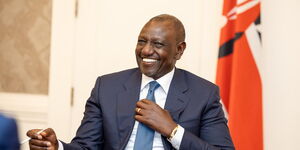
President William Ruto announced that the government aims to eliminate external borrowing for development projects within 10 to 20 years, as part of efforts to address the country’s rising foreign debt.
Speaking at a breakfast meeting with administrative officers at State House in Nairobi during the launch of the Jukwaa la Usalama Report on Tuesday this week, President Ruto said the government would increasingly rely on the securitisation of Kenyans’ savings in the NSSF to meet its financial and development obligations.
Other initiatives the government has taken include shifting some loan repayments from the US dollar to the Chinese yuan. However, Kenya’s recent decision to repay its Standard Gauge Railway (SGR) loan in yuan instead of the traditional US dollar prompted a warning from the IMF over potential currency risks.
According to the IMF, switching currencies can be a proactive approach to debt management, but countries must ensure that the benefits of such moves do not create new vulnerabilities.
“While these transactions may lower costs, they can also introduce currency risks depending on their structure,” a spokesperson at the Washington D.C.-based lender told Bloomberg in November.
“The IMF encourages countries to consider such operations within comprehensive medium-term debt and reserve management strategies to ensure an appropriate balance between cost and risk,” the spokesperson added.