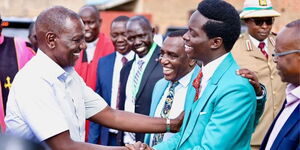

The Orange Democratic Movement leaders have issued firm conditions on their continued cooperation with the ruling United Democratic Alliance (UDA), warning that the broad-based political arrangement will only hold if ODM’s interests and strongholds are respected.
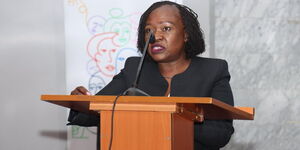
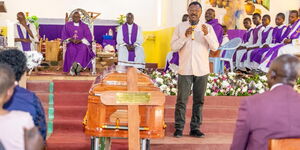
Speaking at the funeral of KBC journalist Festus Amimo in Awasi, Kisumu County, ODM Chairperson Gladys Wanga said the party’s engagement with UDA was governed by a written agreement signed at the Kenyatta International Convention Centre (KICC).
According to Wanga, the agreement contained conditions that explicitly barred political encroachment into each party’s traditional support bases.
“We will only stay in government if our party is strong,” Wanga told mourners, insisting that the terms agreed upon at KICC must be honoured by both UDA and ODM.

In echo of remarks by party leader Oburu Oginga, who had previously called for greater ODM representation in government, Wanga added that ODM’s immediate focus was strengthening its internal structures.
In defence of ODM’s place in the coalition, Ruth Odinga argued that the party’s involvement in government was deliberate and is rooted in its identity as a mass political movement.
“ODM is a movement, and movements are there to stay,” Ruth Odinga said, dismissing suggestions that the party’s participation in government was symbolic of its weakened state.
Energy Cabinet Secretary Opiyo Wandayi struck a peacemaking tone, stating that both ODM and UDA needed to grow independently to make any future political partnership viable.
ALSO READ: ODM Must Consider New Working Agreement With UDA Ahead of 2027 - Otiende Amollo
“ODM must be strengthened. Similarly, UDA must be strengthened,” Wandayi said, adding that unity between strong parties would increase their chances of winning decisively.
However, differing views emerged on the 2027 presidential race, with Senior Counsel Tom Ojienda openly backing President William Ruto for a second term under the broad-based arrangement.
Ojienda argued that electoral success should guide ODM’s eventual choice of candidate, even if the party fields its own aspirant initially.
The remarks highlighted the conditional, strategic, and increasingly scrutinised nature of the ODM-UDA coalition.