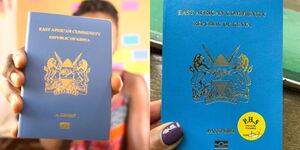

A Kenyan man could be set for serious legal ramifications after he was detained in Thailand for allegedly using an irregular passport.
Twenty-year-old Anthony Mwangi from Nakuru travelled to Thailand in October 2024 with hopes of securing better employment opportunities, only to have his dreams shattered upon arrival.
Thai authorities immediately arrested Anthony after they discovered fraudulent immigration stamps in his passport, documents he claims were provided by his recruitment agent.
He has since been sentenced to two-and-a-half years in a Thai prison, where he faces harsh conditions.

Thailand's Laws on Fake Documentation
Thailand maintains an uncompromising zero-tolerance policy toward travellers and migrants who use fake or fraudulent documents.
Under the Thai Penal Code, document fraud is treated as a serious criminal offence with severe consequences designed to deter such violations.
Forging a passport, whether in whole or in part, or altering a genuine passport carries a punishment of one to ten years imprisonment along with fines ranging from about Ksh8000 to Ksh800,000. The same penalties apply to those who counterfeit visa forms or immigration stamps.
The consequences extend beyond just creating false documents. Using someone else's genuine passport or fraudulently employing a legitimate stamp can result in up to ten years' imprisonment.
Even possessing two or more forged passports is legally presumed as intent to distribute, carrying an even harsher penalty of three to twenty years imprisonment and fines of up to Ksh1.6 million
Beyond criminal prosecution, Thai immigration authorities enforce strict administrative measures against offenders. Anyone found providing false documents faces immediate blocklisting and a permanent ban from re-entering Thailand.
With the country's adoption of a fully digital immigration platform as of January 2026, it has become increasingly difficult to use physical forgeries, as the system flags suspicious patterns and invalid digital arrival cards.
Once legal proceedings are completed, foreigners convicted of document fraud face swift deportation back to their home countries.
The Thai government has also issued warnings about scam websites that imitate the official Thailand Digital Arrival Card system, charging fees for a service that should be free.
Family Demands Government Intervention
Through letters sent to his family via mobile phone, he has described his desperate situation, including a lack of necessities such as proper clothing.
His family back home in Nakuru is now left wondering how the fake passport stamps managed to clear security checks at Kenyan airports.
Anthony's mother, Monica, has placed blame squarely on the recruitment agent who facilitated his travel, questioning the integrity of the departure process that allowed her son to board an international flight with fraudulent documents.
The family's attempts to reach Anthony or secure assistance have been largely unsuccessful, with their efforts to contact the Ministry of Foreign Affairs yielding no results.
Anthony's family in Nakuru is now making a desperate appeal to the Kenyan government to intervene in their son's case and provide assistance.
The family is demanding that the government take action against the recruitment agents responsible for providing Anthony with fraudulent documents.