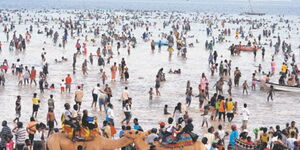

The Mombasa County Government has announced that all beaches will be required to be closed by 6pm during the festive season to enhance the safety of tourists.
Speaking during an interview with NTV on Wednesday, December 10, Mombasa County Police Commander Peter Kimani said that once the whistle is blown at this time, no one will be allowed in the beaches.
The police boss said the initiative is intended to reduce drowning incidents, adding that county security teams and the Kenya Navy will use boats to carry out regular water patrols.
"When it reaches 6pm, our officers shall be blowing whistles so that people may get out of the water so that they may not be affected by high tide, and also prevent drowning," Kimani said.

Furthermore, Kimani said that the county government has also formed new beach management committees that will oversee security on beaches, to protect tourists from rogue beach boys and hawkers.
The committees are composed of officers from the Kenya Wildlife Services (KWS), General police, Tourist Police, and Coast Guard, according to Kimani.
"We have put strategies to ensure that people enjoy the festive season until the new year. We know that many tourists will flood beaches during the festive season, so we have formed beach management committees," Kimani said.
"These committees will ensure that all people who are enjoying themselves on the beaches are not bothered by beach boys and hawkers," he added.
The announcement came hours after Mombasa Governor Abdulswamad Nassir announced that all organisers, promoters, venue owners, and institutions planning to host events within the county must ensure that they get a green light from the disaster management committee.
According to the county chief, the move is aimed at reinforcing security and emergency preparedness during the festive season.
The Governor clarified that the directive applies to all public events, regardless of whether they are free or ticketed and whether they are held indoors or outdoors.
"The Constitution of Kenya assigns county governments functions relating to cultural activities, public entertainment, public amenities, and disaster management," Nassir said.