
The Nairobi County Government has approved the introduction of two-monthly menstrual health days for women employees, to enhance service delivery in the county government.
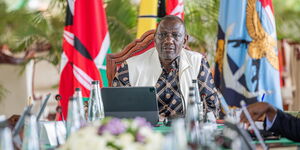
The decision was approved by Nairobi Governor Johnson Sakaja and his Cabinet on Tuesday, December 16.
According to the cabinet, the policy will be adopted into the county's human resource framework.
Menstrual health challenges, particularly dysmenorrhea, have often affected the well-being and performance of women employees in the county, who make up more than half of the county's workforce, according to the county government.

According to City Hall, the lack of menstrual health in the county's HR policy has played a key role in compromising service delivery.
"Studies cited indicate that between 65 and 80 per cent of women experience menstrual pain, with a considerable number suffering symptoms severe enough to impair productivity," a statement from the governor stated.
"Women make up more than half of Nairobi County’s workforce, meaning the impact is reflected in reduced efficiency, increased presenteeism and compromised service delivery," it added.
The new policy is evidence-based and aligns with the county's commitments to gender equality, decent work, and inclusive governance, according to the county government.
The cabinet affirmed that several measures will be adopted in the policy to ensure that the privacy and dignity of female staff in all departments are well shielded.
"Clear guidelines and sensitisation measures will be rolled out across all departments, while monitoring will be integrated into existing HR performance and employee wellbeing systems," the statement read.
Globally, several countries, including Zambia, Japan, Spain, and South Korea, have already adopted menstrual leave policies.
"Other countries with established menstrual leave entitlements include Zambia, Japan, and South Korea—where the Labour Standards Act requires employers to grant one day of menstrual leave per month," the statement read.