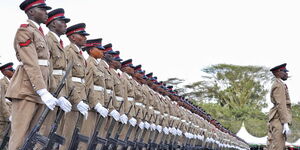

The National Police Service (NPS) has introduced significant changes to its police training curriculum, aimed at modernising the force and improving public trust. This comes as over 10,000 new recruits begin their nine-month mandatory training at various police colleges across the country.
Speaking at the Kiganjo National Police College in Nyeri on Tuesday, NPS Spokesperson Muchiri Nyaga outlined the revamped training approach, noting that recruits will now undergo modules that extend beyond traditional physical drills and penal code studies.
Among the key additions to the curriculum is the integration of forensics, modern technology, and cybercrime detection as part of the initial training. Previously, such specialised expertise was only taught after officers were deployed to specific units such as the DCI.
“With the nature of crime evolving, especially on the digital front, we are preparing our officers to respond effectively. Technology is no longer optional in policing,” said Nyaga.

Human rights training has also been introduced as a core component of the curriculum. The move follows increased criticism of police conduct, particularly during public protests, where officers have been accused of excessive force.
“We have heard the outcry about human rights atrocities, and we acknowledge the gaps. The Inspector General is personally involved to ensure the new training corrects the image of the service and instils a rights-based approach,” Nyaga added.
In addition to law and penal code instruction, the recruits will now receive expanded classroom instruction that includes basic etiquette and public relations training under the community policing framework. This aims to enhance how officers engage with members of the public.
The changes, according to Nyaga, will be part of an effort to professionalise the police force and restore public confidence in its role as a service-oriented institution, rather than one solely focused on enforcement.
The revised modules will be undertaken at all three training colleges in Kenya, including Kiganjo and the Embakasi A and B Campuses in Nairobi.
Meanwhile, Nyaga also revealed that some recruits had to be dropped after the recruitment exercise, with a number of them found to be pregnant and with other complications upon arrival at the training centres.
However, he did not provide a clarification and detailed explanation on the exact number that had been dropped and the replacement modalities.
The training updates come at a time when the government is under pressure to reform policing in Kenya amid growing concerns over security, accountability, and police brutality, which have been particularly prevalent during demonstrations such as the recently witnessed ones in Kenya.