
President William Ruto has announced that the government will establish a new police unit, domiciled at the Directorate of Criminal Investigations (DCI), as part of a renewed push to crack down on illicit substance consumption and the financial networks that enable the trade.
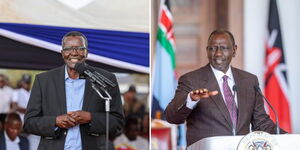
Speaking during his New Year's address at Eldoret State Lodge on Wednesday, December 31, the Head of State said the government would establish a strengthened Anti-Narcotics Unit (ANU) within the DCI with an operational capacity comparable to the elite Anti-Terrorism Police Unit (ATPU).
President Ruto said officers assigned to the unit will receive advanced paramilitary training, equipping them with specialised skills and tactics to more effectively combat organised and high-risk criminal groups.
He noted that the new unit would not replace the mandate of the National Authority for the Campaign Against Alcohol and Drug Abuse (NACADA), but would instead complement its work as a fully resourced formation.

According to the President, the unit will be equipped with modern surveillance, intelligence, forensic, and financial investigation capabilities, enabling it to operate as a permanent, multi-agency team working closely with NACADA.
"We will establish a strengthened Anti-Narcotics Unit within the Directorate of Criminal Investigations, with operational capacity comparable to the Anti-Terrorism Police Unit," Ruto announced.
At the same time, the Head of State said the unit would work in collaboration with the National Intelligence Service (NIS), border management agencies, county governments, and international partners to fully execute its mandate.
To support the expansion, Ruto announced that the unit’s strength would be increased from the current 200 officers to 700 through fresh recruitment and redeployment, with officers undergoing new training for nationwide operations.
The Anti-Narcotics Unit will also be mandated to trace, seize, and forfeit assets linked to narcotics and illicit alcohol investigations, targeting high-level traffickers, financiers, and organised criminal networks.
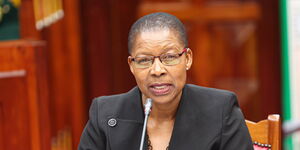
Further, the President urged Chief Justice Martha Koome to accept the Executive’s support in resourcing and establishing specialised courts to fast-track the hearing and determination of drug-related cases, noting that the Assets Recovery Agency (ARA) would be engaged from the point of seizure to ensure proceeds of crime are frozen, prosecuted, forfeited to the State and redirected to rehabilitation, prevention and treatment programmes, while respecting judicial independence.
Additionally, Ruto said border security would be strengthened through enhanced capacity for the Border Patrol Unit (BPU) and the National Police Service (NPS), including the deployment of modern surveillance technologies to monitor movement across Kenya’s borders.
He warned that any public officer, including members of the security agencies, implicated in aiding, shielding or working with drug traffickers and illicit alcohol syndicates would face prosecution and immediate removal from office.
Describing the fight against drugs as a personal mission, Ruto said the struggle went beyond law enforcement and required parental responsibility, community values, and early intervention in the lives of children.