
A petition has been filed at the High Court seeking to stop public service vehicles from playing loud music, with claims that the practice violates multiple constitutional rights of commuters.
In the petition, lawyer Samwel Barongo Nyamari faulted the Matatu Owners Association (MOA), the National Transport and Safety Authority (NTSA), the National Environment Management Authority (NEMA), and the Attorney General for allegedly failing to protect the public from what he termed ''cruel, deafening and disturbing noise disguised as music'' in matatus.
Nyamari argued that loud and unsolicited music in public transport amounts to psychological torture and noise pollution, affecting the general public, particularly children, the elderly, the sick, and people living with autism.
He told the court that for more than six years, he has been a regular matatu user in Nairobi and has been subjected to what he describes as incessant and repetitive loud music whenever he boards public service vehicles.

The petitioner states that matatu operators play loud music indiscriminately, without regard for vulnerable passengers such as babies with tender eardrums, older persons with hearing challenges, exhausted workers, and commuters who need to make phone calls.
Nyamari also contends that passengers are not informed beforehand about loud music, leaving them without the chance to make informed decisions about the transport services they choose.
According to the petition, the practice violates the right to a clean and healthy environment under Article 42 of the Constitution, as excessive noise constitutes environmental pollution.
He further argues that blaring music violates the right to freedom and security of the person under Article 29, characterising it as psychological harm and inhuman treatment imposed by private operators.
The petition further cites a violation of consumer rights under Article 46, arguing that commuters are entitled to transport services of reasonable quality and to information necessary to fully benefit from those services.
Nyamari has also linked the practice to health risks, saying prolonged exposure to loud music threatens the right to the highest attainable standard of health, especially for children, the elderly, and people with sensory sensitivities.
He is seeking court declarations that playing loud music in PSVs is unconstitutional, alongside an order prohibiting matatus from playing loud music altogether.
The petitioner has also asked the court to compel NTSA, NEMA, and the Attorney General to enforce compliance should the orders be granted, arguing that regulatory agencies have failed to rein in the practice despite its widespread nature.
Meanwhile, the court is yet to issue a directive on the mention, hearing, and ruling on the matter.
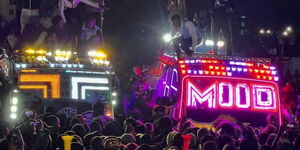
Loud music is particularly common among Kenyan youth, who often prefer modern PSVs, popularly known as "nganya," which blast music accompanied by flickering club lights, large screen displays, and other entertainment amenities for commuters.