SEO Article

Fact Check: Viral ‘Mood’ Matatu Crash Image Found is AI-Generated, Insiders Speak

A photo collage of the Mood matatu and an AI-generated image depicting it as being involved in an accident.

A review of the viral image that surfaced online on Saturday, showing Mood, the famous matatu owned by President William Ruto's son, George Ruto, had crashed, is fake.

The AI-generated image, which showed the famous Nairobi matatu overturned along a highway, left tongues wagging on social media for the better part of the weekend, with many people still believing that the matatu was involved in an accident.

However, a quick visual spot check by Kenyans.co.ke revealed some inconsistencies in the image, including irregular background elements, which are typical signs of an AI-generated image.

We further entered the image into multiple AI detection tools, which also confirmed that the image was AI-generated and not a real photograph. Our analysis of the viral picture that first surfaced on TikTok has found that the image is AI-generated. 

An AI generated image depicting Mood matatu involved in an accident.
An AI generated image depicting Mood matatu involved in an accident

According to at least three AI detector platforms, reversely.ai, wasitai.com, and isgen.ai, the picture is fake.  Reversely.ai and Isgen.ai say the image is AI-generated with 100 per cent certainty, with the other placing a ranking of 78 per cent.

To further find out whether or not Mood was involved in an accident, Kenyans.co.ke reached out to an industry insider with links to the Mood crew. Branden Marshall clarified that the images circulating online depicting Mood involved in a road accident are not authentic and are AI-generated.

Brandon said that the vehicle has been in perfect condition and fully operational and is continuing its normal activities on the road.

According to him, the images are likely being generated by individuals who hate the owner of the matatu or who are trying to express their creativity for attention.

"The image is entirely AI-generated; the vehicle was never involved in an accident. Some people are doing it out of hatred because the car is linked to the president's son, some are doing it just to be creative, and others are doing it just for attention," Brandon said.

"The vehicle is in very good condition, and it is conducting its activity normally. Nothing is wrong, and it has not had any problems recently, and I believe it will not at any time soon," he added.

Since debuting in July, the Ksh14 million flashy matatu has been making headlines across the nation, headlining several entertainment events in Nairobi, in particular.

Earlier this year, on July 18, George held a concert at the Kenyatta International Convention Centre (KICC) to mark the debut of the matatu.

However, two months later, the 14-seater matatu was involved in an accident in Eldoret after it was hit from behind.

The matatu had just arrived in the city on Sunday, September 14, morning for the highly anticipated homecoming event at Maili Tisa Park and Chill when the accident reportedly happened.

Mood matatu accident
A photo collage of the Mood matatu at the scene of an accident in Eldoret on Sunday, September 14, 2025.
Photo
Kenyans.co.ke


EXPLAINER: Why Military Vehicles Do Not Use Standard Civilian Number Plates

A KDF unit patrols Nairobi CBD
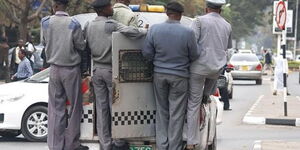
A KDF unit patrols Nairobi CBD and an insert of a number plates on display.
Photo
KDF

Military vehicles often operate without the standard registration plates seen on civilian cars across the world. 

In Kenya, as in many other countries, this practice is rooted in operational security, tactical necessity and administrative protocol.

In Kenya, these factors override the legal requirements set by regulatory bodies such as the National Transport and Safety Authority (NTSA) for the identification of motor vehicles.

Security and Operational Discretion

One of the primary reasons for avoiding standard number plates is security. Military vehicles often carry sensitive equipment, essential personnel or high-ranking officials.

A KDF truck with soldiers deployed in Northern Kenya
A KDF truck with soldiers deployed in Northern Kenya.
Photo
Kenya Army

Displaying a visible, traceable number plate can reveal critical information about the vehicle’s origin, unit or purpose, which could expose troops or operations to threats.

For instance, during counter-terrorism operations in sensitive regions or border patrols, Kenya Defence Forces (KDF) units operate without civilian licence plates to prevent adversaries from tracking their movements and gathering intelligence.  

Vehicles assigned to VIP protection, presidential escorts or rapid deployment teams also use discreet markings instead of full number plates.

In hostile or rough terrain, plates can easily be lost or removed by environmental factors or hostile actors. This is why internal registrations are inscribed directly onto the metal body.

Vehicles without visible plates reduce the chance that information about troop movements, unit types or high-value assets can be inferred by hostile parties.

Immunity and Branch Identification

In Kenya military vehicles operate under the direct authority of the Ministry of Defence and the KDF. 

They are generally exempt from many civilian traffic laws and standard licensing requirements, signifying their unique legal standing. 

This unique military numbering signifies sovereign immunity and a difference in jurisdiction.

Internal Identification

The non-standard numbering system immediately identifies which branch of the KDF the vehicle belongs to, a crucial element for internal military logistics, maintenance, and command structure. 

The format typically uses an abbreviation followed by numbers, all usually painted directly onto the vehicle body in low-visibility colours.

  • Kenya Army (KA): Vehicles typically use the prefix KA
  • Kenya Air Force (KAF): Vehicles typically use the prefix KAF
  • Kenya Navy (KN): Vehicles typically use the prefix KN

Tactical Camouflage

In tactical or operational environments, large, reflective civilian number plates are a liability. 

Standard plates are highly visible, which compromises tactical camouflage.

Military identification numbers are instead painted in a low-visibility colour, such as matte white or black, that blends with the vehicle’s camouflage scheme (like olive green or desert tan). This ensures tactical concealment.

Kenya’s 5th Quick Reaction Force (KENQRF 5)
Kenya’s 5th Quick Reaction Force (KENQRF 5) during a security operation in Eastern DRC on December 10, 2025.
Photo
KDF

Operations

Furthermore, military vehicles are subjected to extreme conditions in combat or rough terrain, where a standard aluminium or plastic number plate could easily be lost or damaged. 

Painting the registration directly onto the metal body ensures the identification remains visible and durable regardless of operational stress.

Internal Tracking

Military vehicles are recorded in specialised internal defence registries rather than the public motor vehicle databases. 

This allows the armed forces to monitor and maintain their fleet without exposing operational details to public scrutiny.

International Practice

Most military forces worldwide do not use civilian registration plates but rather an internal or tactical numbering system. 

Kenya's system aligns with this global standard, particularly for vehicles used in joint missions, training exercises, or regional deployments where immediate identification of a vehicle as ‘military’ is critical. 

For instance, NATO forces and allied militaries employ special formats to maintain discretion.

KDF
A photo collage of the ongoing construction in Thika by the KDF
KDF

Accountability

Units often display insignia, flags, or tactical markings, enabling personnel to recognise vehicles and ensuring accountability within the force without compromising public security.

During high-profile national events and holidays, such as the presidential Land Cruiser, the vehicle often bears the C–in–C plate, signifying it belongs to the Commander-in-Chief, offering a ceremonial identification in place of a standard plate.

The military vehicle identification system, therefore, is a carefully managed balance that prioritises national security, operational effectiveness, and internal accountability over civilian registration formality.

CIC
President William Ruto aboard a military Land Cruiser designated for the Commander-in-Chief of the Defence Forces on December 12, 2025.
PCS

Title Deed is Not Enough Proof of Land Ownership - Court

An image showing someone displaying title deeds
Photo
Ministry of Lands, Public Works, Housing, and Urban Development

For many Kenyans, a title deed represents the ultimate proof of land ownership, a document that seems to guarantee security and legal protection.

But the courts have repeatedly claimed that this piece of paper is not as bulletproof as many would like to think.

In a recent case involving a piece of land in Mombasa that was originally set aside as a public road reserve, the court delivered a harsh lesson about the limits of title deeds.

The land had been surveyed, allocated to private individuals, and registered with proper title deeds, with owners building fences and taking possession as if everything was perfectly legal.

Ardhi House
Ardhi House
Photo
Ministry of Lands, Public Works, Housing, and Urban Development

Years later, anti-corruption authorities challenged the ownership, arguing that the land had never stopped being public property and was never lawfully availed for private allocation.

The registered owners defended themselves with what should have been an unbeatable argument - they had valid title deeds.

But the court ruled that registration cannot legitimise something that was illegal from the very beginning.

If land was public property and was never properly degazetted, surrendered, or excised through lawful processes, then no government officer had the authority to allocate it in the first place.

Any title deed issued under such circumstances is void, regardless of how many innocent buyers the land passed through or how much money changed hands.

This means that even if you conducted a land search, paid all the fees, and built a home, you can still lose everything if the land was originally public property that was illegally allocated.

The courts made it clear that due diligence must go beyond simply checking the Lands Registry, and that the era of hiding behind a title deed is ending.

For Kenyans sitting on former road reserves, riparian land, or utility corridors, this judgment serves as a warning that reclamation can happen even decades after registration.

President William Ruto issuing a woman title deed. Standing alongside him is the Mombasa Governor Abdulswahmad Mohamed. r
PSCU
William Samoei Ruto, PhD

What You Need to Know About KJSEA 2025 Grading System & Placement Criteria

CS Ogamba
Education CS Julius Ogamba, during the launch of the 2025 National Examinations and Assessment Season at the New Mitihani House in South C, Nairobi, on October 3, 2025.
Photo
Ministry of Education

In the wake of the release of the Kenya Junior School Education Assessment (KJSEA), Education Cabinet Secretary Julius Ogamba has unveiled the full details of the inaugural national examinations, including the grading structure and learner placement criteria.

Speaking during the release of the KJSEA exam results at the Mtihani House in Nairobi on Thursday, December 11, the CS sought to provide clarity to parents, teachers and candidates transitioning to senior school next year.

He noted that the current competency-based assessment introduced under the Competency-Based-Curriculum (CBC) mainly relies on the performance levels of a student rather than traditional marks-based grading.

These levels include 'exceeding expectation', 'meeting expectation', 'approaching expectation' and 'below expectation'. 

Education Cabinet Secretary Julius Ogamba, during the release of the 2025 KJSEA results.
Facebook
Julius Ogamba

KJSEA 2025 Grading System

While KJSEA examinations adopted the four-band structure introduced under the CBC, the categories were further divided into two performance levels using an 8-point scale.

Point 8: Represents the highest level of exceeding expectations

Point 1: Represents the lowest level below expectations

According to Ogamba, the aforementioned broader categories allow examiners to distinguish exceptional performance from good performance, ensuring fairness in the assessment.

"The reporting of performance of KJSEA has thus been done from point 1 to point 8, where point 8 is the best at 'exceeding expectation' and point 1 is the least at 'below expectation,'" Ogamba said.

He went on to add, "The creation of these bands serves to distinguish exemplary performance from good performance."

Ogamba also revealed subjects with the strongest performance, noting that out of the 12 subjects offered in the KJSEA, seven recorded a higher proportion of learners performing at meeting and exceeding expectations.

These include Hindu Religious Education (84%), Integrated Science (61%), Social Studies (58.7%), Creative Arts & Sports (58.04%), Kiswahili (57.9%), Christian Religious Education (53.9%) and Agriculture (52%).

Placement in Senior School

According to Ogamba, the final assessment of Grade 9 learners was drawn from three components: 20% from Kenya Primary School Education Assessment (KPSEA), 20% from school-based assessments in Grades 7 and 8 and 60% from the summative KJSEA evaluation in Grade 9.

"This summative evaluation is the KJSEA," Ogamba stated, noting that the final examination was to ensure a comprehensive assessment of the learners transitioning to grade 10.

"An approaching expectation grade is sufficient for learners to progress to senior school pathways that require basic competencies in the subject areas," the CS clarified.

Education Cabinet Secretary Julius Ogamba (Left) alongside Basic Education Principal Secretary Julius Bitok during the release of 2025 KJSEA results.
Facebook
Julius Ogamba

EXPLAINER: NTSA Demerit Points System and How it Affects Your Driving Licence

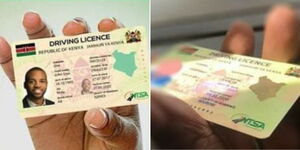
A motorist holding their driving licence
Photo
NTSA

Have you ever wondered what happens to your driving record each time you commit or avoid a traffic offence? Unbeknownst to many, there is an elaborate points system within the National Transport and Safety Authority (NTSA) portal which silently tracks your nuances on the road.

This system, known as the Demerit Points System, assigns points to every licensed driver in Kenya, starting them off with a maximum score of 20 clean points.

It is worth noting that these points are not rewards but rather a measure of how responsibly you conduct yourself on the road. The fewer infractions you commit, the better your score.

Whenever you violate a traffic rule, and the offence is officially recorded, NTSA deducts a specific number of points from your record. This all depends on the severity of the offence.

Screengrab Driving Points
A screen grab showing driving points in the NTSA portal
Photo
NTSA

The core purpose of this system is to encourage safe and responsible driving by creating a transparent and measurable way to monitor drivers' behaviour in the country.

Points are deducted in categories: minor, moderate and serious infractions, with each category carrying a pre-determined number of points reflecting the risk associated with the offence. 

Minor infractions like failure to wear a seatbelt, minor speeding or using a phone while driving typically carry small deductions of two to four points. 

Moderate infractions, such as dangerous overtaking and ignoring traffic signals, can bear bigger penalties if recorded by the NTSA and can lead to a quick depletion of a driver's score. 

A quick spot check by Kenyans.co.ke also established that serious infractions can carry the maximum penalty of 20 points from a single incident. This can include drunk driving, reckless driving, which causes injury or death by dangerous driving, among others. 

What happens when 20 Points Are Depleted

When the points begin to drop, NTSA will monitor the total, and once the deduction reaches a threshold, there are specific actions which will be triggered. 

In the event a driver accumulates enough infractions to cost him 10 points or more within a year, they may be required to undergo a mandatory driving refresher course to correct unsafe habits and restore confidence in the driver's ability to operate a vehicle safely. 

If one depletes all their points to zero within a year through infractions, the NTSA has the authority to suspend a license for a specific period. Suspension effectively means the driver is legally barred from operating any vehicle on Kenyan roads until they are compliant. 

How Points are Restored

Points are typically restored partially on an annual basis, particularly for drivers with clean records during a review period. 

If a driver successfully undergoes NTSA-recommended corrective training, such as defensive driving or a mandatory refresher course, they can have some points restored as part of their rehabilitation. 

One classic example of the loss of points occurred on Tuesday, December 9, when the NTSA announced the suspension of licenses of 62 drivers across six different SACCOs.

These drivers will now be required to undergo re-testing to confirm their competence and suitability to operate on Kenyan roads.

NTSA
NTSA Nakuru team leads joint operations at Salgaa along the Nakuru -Eldoret highway on December 4, 2025.
Photo
NTSA

Architect Explains Why Retractable Cover Was Dropped for Fixed Canopy In Talanta Stadium

talanta stadium
A photo of the progress of construction work inside the Talanta Stadium in Nairobi on Thursday, September 11, 2025.
PCS

The highly anticipated Talanta Stadium will not have a retractable cover, despite initial expectations, and there is a valid reason why. 

As workers race against time to complete what will be the largest sporting infrastructure project in the East Africa region, architect Victor King'o provided rare insight into what the final look would be like, and it does not feature the hyped retractable cover.

According to King'o, the final design of the stadium was focused mainly on practicality and spectator comfort. With this in mind, having a retractable cover was not practical since the main purpose of such a provision was to protect the players and spectators from adverse weather. 

Contrary to fans' expectations, the stadium's roof will not feature a retractable cover. The only part that will be covered by the canopy is where spectators will be seated, like the Kasarani stadium," he explained. 

talanta stadium
An overhead photo of the progress of construction work at the Talanta Stadium in Nairobi on Thursday, September 11, 2025.
PCS

According to the engineer, Kenya, unlike Europe, enjoyed a relatively favourable climate, hence there was no need for temperature control, which is one of the core purposes of a retractable cover. 

“The most important thing is to shelter the spectators. The pitch itself will remain open to the sky”, he stated.

Across the globe, several football stadiums have retractable covers, which shield spectators and players from extreme conditions such as extreme sunlight, snow and at times rain. One such facility is the famous Wembley Stadium in the UK. 

These covers also help maintain the integrity of the ground's surface, especially in areas where the direct sunlight of heavy rain tends to affect the playing grass. 

As far as the Talanta Stadium is concerned, architects decided to go for a hybrid system, where the pitch combines natural Bermuda grass with synthetic reinforcement, suitable primarily for football and rugby, but adaptable for other events. 

Besides the main 60,000-seater stadium, the complex will also have three other training facilities, which will include a smaller 2000-capacity mini-stadium. 

Because the main stadium will not have a track, an eight-lane running track will be incorporated into the mini-stadium, providing a chance for other disciplines to enjoy the facilities of the multi-billion shilling project. 

Notably, Talanta Stadium's design incorporates technological and artistic elements, including a roof canopy built with hydraulically tensioned steel cables -  the first of its kind in the region. 

In terms of accessibility, improvements are underway, including expansion works along Ngong Road. There are also plans to have a dedicated commuter train to ease access to and from the stadium during match days. 

Further, there will be at least 15 elevators throughout the stadium for easy access for spectators. 

Media facilities will also have dedicated access points, including a media tribune and conference rooms to support live commentary during matches. 

Other features of the stadium include seven changing rooms, VIP lounges, modern locker rooms, advanced media centres, VAR booths, and goal-line technology, making it fully prepared for high-profile matches and seamless live broadcasts.

Artistic impression of Talanta Sports City Stadium.
PCS


EXPLAINER: Six Common Habits Slowly Killing Your Car and How to Avoid Them

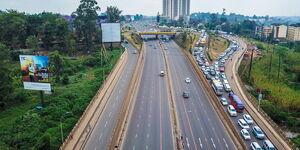
A traffic jam observed in Nairobi Central Business District.
Motorists stuck in a traffic jam inside Nairobi Central Business District
Photo
Ma3Route

Most car owners in Kenya, particularly those who are new to car ownership, dream of owning a vehicle that will run smoothly for years. Yet many unknowingly engage in everyday habits that gradually destroy engines, transmissions, and other critical components.

What may seem like harmless shortcuts or routine actions can quietly reduce a car’s lifespan, resulting in the need for frequent repairs and increasing costs over time.

According to car experts, understanding the science behind these six habits is key to keeping a vehicle reliable and ensuring it provides years of faithful service.  

1. Wrong Oil Use

Neglecting oil changes is one of the biggest threats to a car’s engine. Engine oil has many functions, the most important of which are lubricating moving parts, reducing friction, absorbing heat and preventing wear.

Over time, oil loses its viscosity and becomes contaminated with dirt and metal particles. This means the engine has to work harder, which can lead to overheating, excessive wear and, eventually, failure. Using the wrong oil type also amplifies this risk.

Cars parked outside an estate in Nairobi.
Photo
Handout

Additionally, the quality of fuel and oil plays a significant role in maintaining a vehicle's health. For example, poor-grade fuel may contain impurities that clog injectors, while low-quality oil may not reduce friction or carry heat away from engine parts effectively.

Using substandard consumables repeatedly accelerates wear, reduces efficiency and can lead to expensive repairs.

2. Tyre Maintenance 

When a car is in motion, underinflated tyres create more rolling resistance, forcing the engine to exert extra power. This increases fuel consumption and accelerates wear.

Misaligned wheels lead to uneven tyre wear and put strain on suspension components. Worn tyres reduce braking efficiency and stability, which indirectly affects the engine as it compensates for uneven loads. Therefore, it is important to regularly check your tyres and alignment to avoid these risks. 

3. Excess Engine Idling 

Many drivers, especially those used to older cars with outdated systems, tend to idle their engines excessively, believing it is harmless or necessary for warming up the car. However, the truth is that modern engines are designed to reach their optimal temperature quickly through gentle driving rather than prolonged idling.

Excessive idling leads to incomplete fuel combustion and carbon buildup in valves and spark plugs, resulting in higher fuel consumption and ultimately shortening engine life.

Another important consideration, especially at this time of year, is short driving distances, given that some cars will be parked until January, when owners resume work.  

Short trips without allowing the engine enough time to reach its optimal operating temperature can cause wear and tear. Engines that are cold and run for only a few minutes experience incomplete fuel combustion, which leaves carbon deposits on valves and pistons.

Over time, these deposits can reduce engine efficiency, increase fuel consumption and reduce the vehicle’s lifespan.

Vehicles at an auction
Photo
Motor Trader

4. Overloading

This is particularly relevant during the festive season, when Kenyans travel from the countryside to urban centres with goods from home. It is important to note that additional weight from passengers or cargo puts extra strain on the suspension, brakes, and engine.

This can result in premature failure of the shock absorbers, warped brake discs and engine overheating, as the vehicle struggles to move heavier loads.  

5. Ignoring Servicing and Replacements

These are simple habits that many drivers probably learned in driving school but choose to ignore. However, replacing air filters, fuel filters, spark plugs and coolant ensures the engine runs efficiently.

While skipping these checks may seem convenient, it can allow minor issues, such as clogged injectors or overheating, to develop into costly mechanical failures.

6. Accelerator Habits

Some drivers rev the engine when it is cold, believing it will warm up more quickly. However, experts say that cold engine oil is thicker and cannot lubricate moving parts properly.

Accelerating aggressively under these conditions increases friction, which gradually damages pistons, bearings and cylinders over time. This ultimately shortens the engine’s lifespan, leaving you in need of a repair service such as Kirinyaga Road, Otis Yard or whatever clinic you take your machine to.

Harsh acceleration, sudden braking and speeding also put high stress on the engine, transmission, brakes and tyres. Smooth acceleration, anticipating traffic flow and maintaining steady speeds, on the other hand, reduce strain, increase fuel efficiency and prolong the life of major components.

massive traffic jam between Kinungi and Flyover
A massive traffic jam between Kinungi and Flyover caused by a road mishap involving multiple vehicles on July 13, 2025.
Photo
LoDCA

Did You Know You Can Sue Your Former Employer For Bad Professional Reviews Given Behind Your Back?

jobseekers queuing on Wabera Street, Nairobi, waiting to be interviewed by The Sarova Stanley on May 26, 2018
Jobseekers queuing on Wabera Street, Nairobi, waiting to be interviewed by The Sarova Stanley on May 26, 2018
Daily Nation

Did you know that you can sue your current or former employer for sharing your personal information, such as photos or phone call recordings, without your consent? Welcome to Money Box, where we explore all things money and finance.

Earlier this year, an employer was ordered to pay a former employee Ksh250,000 for unlawfully sharing their personal data with another employer. The Office of the Data Protection Commissioner (ODPC) ruled that this was a clear violation of Kenya’s Data Protection Act 2019.

The employee claimed that negative information about her had been disclosed to a potential employer without her consent while she was on probation and alleged that this unlawful disclosure had cost her a job opportunity.

According to ODPC proceedings, when the employee requested access to the information, her former employer refused, citing confidentiality as the reason. 

An image of a court gravel
Photo
CapitalFM

The ODPC investigation found that the former employer had failed to provide the requested information and had not obtained consent to share the data. According to the law, the former employer violated Section 26(b) of the Data Protection Act by withholding this information.

Under Section 65 of the Act, anyone who suffers damage due to a breach of its provisions is entitled to compensation for both financial loss and non-financial harm, such as distress or reputational damage.

At the same time, Regulation 14(3)(e) of the Data Protection (Complaints Handling Procedure and Enforcement) Regulations 2021 empowers the ODPC to award compensation to affected data subjects. 

Meanwhile, the ODPC ordered the employer to immediately provide the employee with the letters referencing her performance that had been shared, in a bid to ensure full transparency about the information that was initially circulated.

As such, the employer was also ordered to pay the Ksh250,000 as compensation for the distress and violation of rights suffered by the employee.  

In essence, the ODPC clarified that if an employer talks about an employee, for instance, when responding to a referee, then that employee has a legal right to know all the information that was said or shared.

If you thought that was just a one-off, think again. The data commissioner also recently imposed a Ksh250,000 penalty on a financial institution over a data privacy breach involving the mishandling of a customer’s email address.

The fine came after a report revealed repeated disclosure of confidential business information to an unintended recipient. The case followed a complaint lodged on October 22, 2024, by a business owner whose requests to update his correct email address had been repeatedly ignored.

So, next time you land that dream job, get shortlisted, or face an interview only to be suddenly rejected, pause and think. Maybe it was a bad review or some personal information that got shared without your consent, something you could actually cash in on.  

A photo of Kenyans queuing for a job interview
Photo
Kenya Pics

Ministry of Health Refutes Increase in HIV Prevalence in Nairobi

A medic holding a HIV testing kit
A medic holding an HIV testing kit
Photo
GCAPP

The Ministry of Health has come out to clarify reports purporting an increase in the prevalence of HIV in Nairobi following concerns and confusion over the accuracy of the information.

Speaking on Monday night during an interview on Citizen TV, Stephen Ndolo, Director at the National Syndemic Disease Control Council, clarified that HIV prevalence in Nairobi has actually decreased.

This came after Nairobi Governor Johnson Sakaja sought clarification on the accuracy of figures suggesting an increase in the county's HIV rate.

According to Ndolo, Nairobi saw a decline in HIV prevalence from 4.2 per cent to 3.7 per cent over the last year, a move that he said showed the government's efforts in preventing the spread of the deadly virus.

nairobi cbd
An aerial view of the Nairobi Central Business District (CBD).
Photo
Raymond Omollo

"What I meant is that the HIV prevalence in Nairobi has actually decreased. It was 4.2 per cent, now it is 3.7 per cent," Ndolo clarified.

He went on to add, "It has gone down, but when you look at the absolute numbers because of the high denominator, you might think Nairobi has more infections."

He, however, warned that despite the drop in the rate of HIV infections in Nairobi, the infection rate in the country had significantly increased between 2023 and 2024.

"That should not take away the fact that there is an unacceptably high number of new infections in the country," he reiterated.

The clarification comes on the back of reports suggesting that Nairobi County led in new HIV infections, followed by Migori, Kisumu, Homa Bay, Busia, Siaya, Kakamega, Nakuru, Mombasa and Bungoma.

According to the report that had been initially released by the National Syndemic Disease Control Council, the above counties accounted for 60 per cent of new HIV infections in the country in 2024.

The agency noted that in 2024, HIV prevalence in the country stood at 3 per cent, with higher rates among females at 4 per cent compared to the male counterparts at 2 per cent.

The survey report further showed that HIV related deaths increased by 0.05 per cent in 2024, which translates to 21,007 deaths compared to 2023, which saw 18,473 deaths.

A HIV specimen
A photo of an HIV test specimen.
File

Explained: How New Kenya Power Meters Work

Kenya Power token and an electricity meter
A photo collage of a Kenyan recharging their token metre and a Kenya Power Meter used to measure amount of electricity used at each premises, August 28, 2025.
Photo
Kenyans.co.ke

Kenya Power has rolled out a new Optical Character Recognition (OCR) meter reading system aimed at improving billing accuracy and efficiency across the country.

According to the utility provider, the system works by allowing meter readers to scan meter displays instead of manually typing in readings. 

Once scanned, the data is automatically captured and processed, reducing errors that often occur with manual entry.

Kenya Power said in a statement that the rollout will cover all eight regions of the company, following a successful six-month pilot in Nairobi that began in March 2025 with a total of 1.8 million postpaid meters targeted under the new system.

Kenya Power staff at work
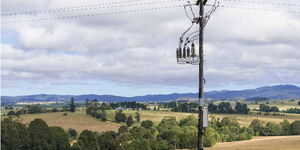
Kenya Power staff attending to a transformer during a past maintenance exercise in Nairobi County.
Photo
Kenya Power

According to Richard Wida, Kenya Power’s Commercial Cycle Manager, the OCR system allows meter readers to scan meters, with the readings automatically captured by the system, saving time and eliminating human error.

“Technology is a major driver of our business, and in terms of billing, specifically meter reading, we have been looking at how to make it better and more accurate. With the OCR system, the meter reader will just be required to scan the meter, and the system will pick the meter readings automatically,” said Wida.

Adding that: “The OCR technology is a major milestone in Kenya Power’s digital transformation journey through which the Company is aiming to strengthen service delivery and enhance customer experience. It will complement other technologies that the Company has deployed to improve service delivery and strengthen operations.”

Why the System

The system is designed to reduce billing anomalies caused by incorrect readings and complements existing digital platforms, including the MyPower app and USSD Code *977#, which allow customers to self-read and submit readings for accurate billing.

The company said it plans to enable OCR for self-reading in the future, allowing customers to record their meter readings easily and with minimal risk of error.

The rollout is part of Kenya Power’s wider digital transformation, which includes smart meters for large power users, SMEs, and selected domestic customers. 

In July this year, Energy Cabinet Secretary Opiyo Wandayi announced that the government will soon unveil a new electricity distribution blueprint to address rising cases of unlawful power connections in densely populated residential areas.

Wandayi explained that the blueprint will introduce a bulk metering and billing system, allowing a single individual or entity to purchase electricity from Kenya Power and Light Company (KPLC) and then redistribute it to other consumers in a designated area.

The proposed model will require residents of a building, estate, or settlement to agree on a single person or legally registered entity to act as their power supplier, effectively becoming the official contact point with KPLC.

A collage of a token meter displaying the 'connect' error (left) and several meter token (right).
A collage of a token meter displaying the 'connect' (left) and several Customer Interface Units (CIU) of a building (right).
Photo
Kenya Power