
The government has announced new measures to ensure predictability and fairness in levy administration affecting manufacturers.
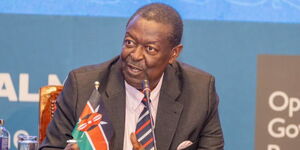
Lee Kinyanjui, Cabinet Secretary for the Ministry of Investments, Trade and Industry, announced the adoption of an escalation approach to the levy, which is designed to reflect inflationary trends up to 2030 and beyond.
This decision followed consultations with industry stakeholders regarding the key changes outlined in the Standards Levy Order 2025.
Essentially, the escalation approach means that the levy will gradually increase over time to match inflation. This ensures that manufacturers are not overcharged as prices rise.

The CS also confirmed the government would review of the Classes of Manufacturing under the Standards Levy rules to provide clarity and remove ambiguities which have affected compliance among manufacturers.
Further, efforts are underway to review import inspection charges in a move aimed at boosting industrial growth and improving the competitiveness of Kenyan products in local and international markets.
To implement these measures, the Ministry has deployed a special team tasked to work with Kenya Bureau of Standards (KEBS) to see out the reforms.
CS Kinyanjui emphasised the role of KEBS in facilitating trade, protecting customers and strengthening the country's quality infrastructure, with strengthening standards enforcement seen as part of a broader effort to support industrial development.
From the meeting, the CS also confirmed that manufacturers who had an annual turnover below Ksh5 million would remain exempt from the Standards Levy, typically paid to KEBS.
The relief has already benefited over 10,000 micro, small, and medium enterprises (MSMEs), aligning with the government’s Bottom-Up Economic Transformation Agenda.
Also, the Standards Levy has seen adjustments to its annual ceiling remaining at 0.2 per cent of turnover under the new order, with a cap of Ksh4 million for the first five years. In essence, under the new rules, the most a company will pay per year is Ksh 4 million for the next five years.
Manufacturers have since welcomed the reforms, noting that the review of things like inspection fees would reduce operational costs and increase competitiveness for Kenyan products in regional and global markets.