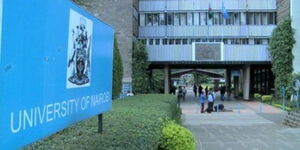

The Employment and Labour Relations Court has issued fresh orders halting the recruitment process for a Vice-Chancellor at the University of Nairobi, pending the hearing and determination of a case filed by Professor Duke Omondi Orata.
In the orders, the court restrained the University of Nairobi Council from proceeding with the recruitment until the matter is mentioned and directions are issued on the way forward, citing concerns over the legality and fairness of the ongoing leadership appointments.
The case is anchored on a dispute arising from the earlier recruitment of a substantive Vice-Chancellor, which Orata argues was conducted by the Public Service Commission and resulted in a clear merit list.
According to court filings, Professor Orata was ranked second behind Professor Bitange Ndemo.

Following Professor Ndemo’s withdrawal from the race in May 2025, Orata maintains that he became the leading candidate and had a legitimate expectation to be appointed as Vice-Chancellor in line with university statutes and PSC procedures.
Through his lawyers, Professor Orata formally wrote to the University of Nairobi Council in November 2025, accusing it of failing to act on the PSC merit list and terming the delay a violation of fairness and established recruitment standards.
The letter warned that the continued failure to appoint him amounted to a glaring irregularity in a high-level public appointment and exposed the institution to legal risk.
Separately, Orata also petitioned the Parliamentary Education Committee and EACC, seeking intervention after the council allegedly went silent on his appointment despite the completed recruitment process and submission of the merit list.
Meanwhile, the leadership crisis at the University of Nairobi has persisted for nearly two years, fuelled by power struggles, legal battles, and disagreements over governance structures at the country’s oldest university.
The wrangles have repeatedly disrupted administration and drawn in external actors, including government agencies and Parliament.
The standoff intensified in 2024 during the tenure of former VC Prof Stephen Gitahi Kiama, whose leadership was marred by prolonged disputes with the university council. Kiama was placed on compulsory leave before the council moved to terminate his contract in October 2024, several months before its scheduled expiry in January 2025, citing gross misconduct and management failures.
Following Kiama’s removal, the council appointed Prof Margaret Jesang Hutchinson as acting Vice-Chancellor as it sought to stabilise operations and pave the way for the recruitment of a substantive officeholder. The transition period, however, failed to calm tensions, with staff unions and stakeholders raising concerns over governance paralysis.
In early 2025, the Public Service Commission conducted interviews for the Vice-Chancellor position and forwarded a merit list to the university council. Prof Ndemo emerged top in the process but later withdrew from the race, triggering fresh disagreements over succession and whether the runner-up should automatically be appointed.
The leadership vacuum prompted the Ministry of Education to step in, questioning some of the council’s decisions and insisting on strict adherence to established procedures.
The ministry’s involvement, coupled with court cases and petitions, has further complicated efforts to resolve the crisis, leaving the university entangled in prolonged uncertainty over its top leadership.