SEO Article

Hidden Car Parts With Unique Functions

A photo of a car's interior.
A photo of the interior of a saloon car.
Photo
CC Top Shop

With the advancement of technology, car manufacturers are finding new ways of providing solutions to drivers who experience different challenges when driving.

As the automobiles market continues to become more cutthroat, various manufacturers are finding new ways to remain competitive including introducing new features.

From steering wheel adjustment knobs to anti-glare rearview mirrors, these functionalities are aimed at ensuring that drivers are comfortable when cruising on the road. They are also geared at preventing road accidents.

However, most motorists do not know of these features exist as they are typically placed in hidden parts of the vehicle.

Kenyans.co.ke takes a look at these features and how they can help you when driving a vehicle.

A photo of a wrench which allows motorists to adjust a steering wheel.
Photo
WapCar

Adjustable Steering Wheels

Most vehicles are designed using the standard height of human beings. However, motorists often desire to adjust the steering wheel to lock in  a more comfortable driving position.

Unknown to many, drivers can adjust their steering wheels using a knob usually located around the steering column - just below the steering wheel.

While some vehicles have knobs, others have a wrench that can be pulled out to allow a driver to adjust the steering wheel.

In most vehicles, the steering wheel can be pulled up - closer to the driver's space.

Some steering wheels can also be lowered or lifted.

Anti-Glare Mirror 

The rear-view mirror is one of the most important components of a vehicle as it helps a driver monitor vehicles behind them.

Notably, during the nighttime, when motorists are driving with headlights on, the driver can easily become distracted especially if they have an eyesight problem.

Therefore, vehicle manufacturers install a black wrench under the rearview mirror which can be used to turn on the antiglare function. The wrench acts like a switch and is turned on by adjusting it forward.

A photo of a rearview mirror with the antiglare knob (circled in red).
Photo
Car and Driver

Motorists are, however, advised to be careful when the antiglare function is on as they may underestimate the distance of the vehicle behind them.

Fuel Tank Indicator

While driving a new vehicle, struggling to determine the position of the fuel tank - whether located on the right or the left is common.

As such, car manufacturers have a fuel tank indicator at the fuel gauge on the dashboard.

However, in Kenya, most vehicles have the fuel tank on the left side. The positioning is informed by the need to protect drivers in case of an accident. 

An-Image-of-a-Car-Fuelling-At-a-Petrol-Station
A photo of a petrol attendant fueling a car on February 2020.
Photo
Ma3Route

How Fraudsters Deceive Kenyans into Losing Their Lands

Samples of title deeds
Samples of approved title deeds shared by the Ministry of Lands on October 2021.
Photo
Ministry of Lands

Double allocation of land by the lands Ministry is the most common method through which Kenyans lose their land, a new survey has revealed.

The National Crime Research Centre (NCRC), in Baseline Study on Land-Related Crimes and Offences in Kenya report released on Wednesday, showed that over 36.5 per cent cases reported in the past year were due to multiple allocations of land which resulted in confusion over the validity of title deeds.

Per the survey, 484 cases of double allocation were reported in the past year, followed by removal of land beacons with 418 cases, trespassing on private land (411) and forging of land documents (307).

A signpost indicating that the parcel of land is for sale.
Photo
Realtor.com

Other ways used by fraudsters include altering land maps (292 cases), conspiracy to defraud (278), issuance of fake titles (229) and occupying and selling of land without authority (228 cases).

The report further attributes the increase in land-related cases to landowners who are not present.

"From the finding of this study, it is highly likely that the issue of absentee landlords could be in part, the opportunity to the would-be criminals of land-related crimes and offences. It is imperative that land owners be sensitized on routine inspections of their parcel of land for purposes of ascertaining the condition of ownership and also the boundaries beacons," read part of the report.

The report also cited an informant from the National Government Administration in Kisii County, who mentioned that landowners who travel abroad frequently become targets of land-related crimes.

"In this county there have been cases where land owners went abroad and the care taker poses as the land owner thus oversees fraudulent sale of the land. Influential people collude with brokers and land officials to transfer land illegally," he said.

From the findings of the survey, it also emerged that corrupt government officials (NGAOs, land officials, judiciary, ministry of land), land brokers, family members, private surveyors, corrupt advocates and some politicians formed part of the fraudsters who were frequently involved in the crimes.

Cases involving land brokers led with 41.4 per cent, followed by family members (39.7 per cent), neighbours (35. 1 per cent) and corrupt land buying company officials (21.9 per cent).

Others included land developers (12.9 per cent), political leaders (10.2 per cent and corrupt advocates (10.1 per cent).

A view of Ardhi House along Ngong Road in Nairobi.
Entrance of Ardhi House along Ngong Road in Nairobi.
Photo
Ministry of Lands

Report Reveals Reason Most Land Owners in Kenya Lack Title Deeds

A photo of title deeds places on a table on January 30, 2019.
A photo of title deeds
Photo
AMG Realtors

Despite being land owners, a majority of Kenyans still lack title deeds, which has been cited as a major problem especially at a time when land grabbing cases are on the rise.

According to a report by the National Crime Research Centre, only 37 per cent of land owners in Kenya have title deeds.

The low number is alarming with experts questioning why these section of Kenyans fail to follow up to have their documents processed.

However, the report specifically points out that it is not the land owners' fault, and instead apportioned the blame on the government.

A photo of land under development in Kenya.
Photo
Real Estate Kenya

"Lack of proper legal documents may not entirely be blamed on an individual because registration of title in the land throughout Kenya as per article 67 (2) (c) of the Constitution of Kenya is an obligation of the government," reads part of the report.

The report further points out that some landowners are relying on other forms of documentation to prove ownership such as a written will, lease, share certificate, allotment letter, and sale/purchase agreement.  

Per the report, the  percentage of land owners with the above documents is 2.5 per cent, 1.4 per cent, 19.0 per cent, 11.3 per cent, and 11.4 per cent respectively.

According to the National Lands Commission draft advisory report published in 2018, less than 30 per cent of Kenya's total area is registered.

"Approximately 4.06 million title deeds were registered countrywide accounting for 8,346,081.99 hectares of land registered," reads the report in parts.

The Report of Baseline Survey on Land Related Crimes Kenya recommended that the relevant state departments and agencies expedite the process of land registration and issuance of land ownership documents.

In the report, it was disclosed that most Kenyans acquired land by either through buying or inheritance. Other ownership channels cited in the report include; gifting or payment through leasing.

"The study established that the majority of land owners were locals (70.8 per cent), whereas 29.2 per cent were non-locals who acquired land in the locality," read the report in parts.

Further, the report unearthed a gender imbalance in the control of productive assets such as land, citing that men are highly favoured in developing countries like Kenya in relation to land ownership.

A view of Ardhi House along Ngong Road in Nairobi.
Entrance of Ardhi House along Ngong Road in Nairobi.
Photo
Ministry of Lands

African Traditions That the Elite Kenyans Still Practice

Photo of President William Ruto at his daughters wedding, June Ruto in July 2021
Photo
DPPS

In African society, culture is the heartbeat of our passion. It's our song, our dance, our story. It unites us, fuels our spirits, and paints our lives with vibrant colours.

As Africans, we embrace our culture with passion because it embodies our identity, represents how we have been socialised, and anchors us in rich traditions.

It's a source of pride, resilience, and belonging, inspiring us to preserve, celebrate, and pass down our heritage to the generations yet to come.

Even so, it is instructive to note that African culture is slowly being eroded as black people within the continent increasingly warm up to Western mannerisms.

Although those in rural settings have largely kept the spirit of African culture alive, their counterparts in urban areas have over the years gradually moved away from certain traditions, in favour of a more modern and flashier lifestyle.

However, there are those traditions that wealthy Africans, and more specifically, elite Kenyans have stuck to.

Kenyans.co.ke takes a look at some of them.

Traditional Marriages & Ruracios

Very few traditions embody Kenyan love culture like traditional marriages. 

Ask any Kenyan about ruracio, and their eyes will light up as they describe the event.

One captivating aspect of the tradition involves a blindfolded man, seeking a woman's hand in marriage, identifying his future bride from a group of women, including the lady's relatives.

Ruracios are not merely ceremonies; they are vibrant celebrations, brimming with joy and familial bonds.

This tradition marks the commencement of a promising journey with one's dream partner, signifying the first step toward a bright and harmonious future together.

When its affluent families involved, the event is even more glamorous.

For instance, the family of Prime Cabinet Secretary Musalia Mudavadi went all out during his daughter Maryanne Mudavadi's traditional wedding held on September 16.

The colourful event was attended by several senior politicians and prominent personalities 

Maryanne was getting married to lawyer Nyaga Karanja in a traditional Kuara Itara wedding ceremony.

The Kuara Itara traditional wedding is a popular custom in the Kikuyu Community and is done to allow the bride's family to see their daughter's nesting place being done at the groom's home.

Photo of Prime CS Musalia Mudavadi and daughter Maryanne Mudavadi with her spouse Nyaga Karanja during her wedding in Vihiga August 2023
Photo
Musalia Mudavadi

Another perfect example of how prominent families go big on traditional marriages is the case of former President Uhuru Kenyatta's eldest son Jomo who wedded the love of his life Fiona Achola on April 8, 2018.

The wedding was so secretive that no photos were allowed.

Before the actual wedding, the two had held a traditional wedding ceremony in 2016 where Achola got a warm reception at Uhuru’s rural home in Ichaweri, Gatundu, Kiambu County.

Achola was formally handed over to the Kenyattas by her mother, Ruth Omamo. 

The event was graced by the presence of her aunt, former Defence Cabinet Secretary Rachelle Omamo.

From the Kenyatta side; Beth Mugo, Kristina Pratt, Nyokabi Muthama, Anna, Pip, and Christine Gakuo also attended. 

Achola was escorted to her new home by her relatives, marking the joyous occasion.

Housewarming

Once a man successfully completes the construction of his home, it is a common tradition in many cultures to celebrate this achievement by hosting a housewarming ceremony. 

In modern-day society, it is customary for guests to bring symbolic gifts such as salt, wine, and bread to the event.

Guests typically feast on food provided by the host, emphasising the community's support and togetherness during such occasions.

One event that captured this perfectly was the housewarming of Citizen TV journalist Stephen Letoo held on October 13, 2023. in Kilgoris, Narok County. 

Photo of Stephen Letoo and Chemutai Goin during a housewarming party in Narok on October 13, 2023
Photo
kenyans.co.ke

Letoo, fondly referred to his Thanksgiving ceremony as "Letoo Day." 

To mark this momentous occasion, the journalist slaughtered 5 bulls.

Circumcision 

Circumcision by virtue of being a rite of passage is a big deal in traditional African society.

For a parent, nothing quite puts a smile than seeing their son finally become a man and finally take the first step towards fending for themselves.

Take the case of National Assembly Deputy Speaker Gladys Boss Shollei who heaped praises on her son in December 2022, after he successfully underwent this stage of life.

Shollei thanked God for guiding her son through the entire process which usually takes ten days.

"With a heart filled with praise and thanksgiving, I celebrated my son's Korom Arap Shollei coming of age. His journey into manhood is complete," Shollei said in a statement.

Photo of Triki Mask Dancers in Vihiga
Photo
Ministry of Youth Affairs,the Arts and Sports

Chanting for the Dead

The phrase 'lets pay our last respects' is the perfect way to think about why people celebrate the lives of their kin or loved ones after they pass away.

However, people do this differently. Some pray or cry while others invite community members to share good stories about those who have passed away.

One unique way that the Kenyan elite celebrate the deceased is to chant for them.

This is particularly common in the Luo community.

The chant according to Luo elders, is a preserve for fallen greats, including political leaders, coveted industrialists, decorated sportspeople, and religious leaders, among other respected members of the society.

Photo of Raila Odinga attending Professor George Magoha's funeral in January 2023
Photo
Brian Amwai

ODM leader Raila Odinga chose a popular Luo dirge to mourn former president  Daniel Moi at the late Head of State's burial service held at Kabarak University Grounds on Wednesday, February 12, 2020. 

He also honored Kenya's third president, Mwai Kibaki with a chant during the latter's burial ceremony.

Blessing of Elders

Although most Kenyan politicians have taken advantage this tradition for expedience, it is still one of the most cherished among the elite.

Howso?

Rewind to 2012, when Mt Kenya elders held prayers at State House shortly before former President Mwai Kibaki vacated the house on the hill. 

The rationale behind the event was to bless the premises before Kenya's 4th President Uhuru Kenyatta took over.

Both Kibaki and Kenyatta came from the Mt Kenya region. The elders believed that blessing State House was a good omen that would bring good luck to the latter throughout the course of his Presidency.

Photo of Attorney General Justin Muturi During his Coronation
Photo
KNA

Deputy President Gachagua also held a one-of-a-kind blessing ceremony when he took oath of office.

Eldoret-based Kikuyu elders also endorsed President William Ruto as their preferred presidential candidate in the buildup to the 2022 general election.

Praying Facing the Mountain

In his legacy book; Facing Mt. Kenya, Kenya's founding father Jomo Kenyatta intimated that praying while facing Mt Kenya was a sure way of getting what you yearn for and seek.

The Kikuyu thought the light from the mountain was a manifestation of their God’s power, “Utheri” as such, Kenyatta believed that Mt Kenya was sacred.

The same tradition has been carried over for generations.

In January 2023,  Deputy President Rigathi Gachagua trekked to Mt Kenya and prayed while facing the mountain, which he believed would bring an end to the country's drought and set the country on a course towards prosperity. 

Photo of DP Rigathi Gachagua Praying facing Mt. Kenya January 2023
Photo
DPPS

After the prayers, Gachagua revealed that he prayed to God for increased rainfall and a plentiful harvest for Kenyan farmers.

Bullfighting

Bullfighting is a very common tradition in Western Kenya.

The Luhyas believe the tradition promotes peace among communities, distinguishing it from the Spanish corrida de toros where humans confront bulls.

In Kakamega bullfighting, the animals engage in combat instead of people.

Kakamega Senator, Boni Khalwale is a lifelong enthusiast of the tradition and has even adopted the nickname Bull Fighter.

The event also presents an opportunity for the two strongest bulls to showcase their talents and make their owners a tidy sum.

Photo of a Bullfighting match in Kakamega
Photo
DPPS

Simple and Affordable Tricks to Clean Your Fridge

From left: A photo collage of an empty fridge, a dirty fridge door and a woman reacting a smelly fridge.
From left: A photo collage of an empty fridge, a dirty fridge door and a woman reacting to a smelly fridge.
Kenyans.co.ke
MaidForYou

A fridge is one of the most basic household items you will find in a Kenyan home. The kitchen appliance comes in different sizes and shapes and helps households preserve cooked and uncooked food and cool beverages.

However, there are challenges that come along with owning and using these electrical appliances. 

Some of the common hygienic challenges experienced by people who own fridges over several years include; foul smell, food stains, and dirty fridge door rubbers.

Kenyans.co.ke looks at a few simple ways you can clean your fridge using everyday home products such as tea bags and vinegar.

A collage image of EPRA stickers on refrigerators.
Facebook

Smell

Over time, fridges tend to develop a foul smell due to food spoilage, often caused by temporary power outages or existing bacteria within the fridge.

The unpleasant odour is typically noticeable the moment the fridge door is opened. To address this issue, apart from removing spoiled food items, one can effectively eliminate the smell using common cooking ingredients such as used tea bags and baking soda.

For instance, placing used tea bags in a container inside the fridge for three days can absorb the bad odour, leaving the fridge with a fresh scent. 

The tea bags should be replaced every 3 days to maintain the desired effect. Similarly, baking soda can be utilised using the same method, but it needs to be replaced after 24 hours.

Alternatively, soaking a piece of dry cloth in vinegar, placing it on a dish, and keeping it inside the fridge can also help neutralise the foul smell. The cloth can be removed once the unpleasant odor dissipates.

Stains

Fridge interiors, typically white, often get stains due to food spillage, posing a challenge in terms of cleaning.

A practical solution involves using a mixture of hot water, vinegar, and dish soap. 

To employ this method, combine a teaspoon of vinegar with a litre of hot water, adding a few drops of liquid soap. 

Dip a dry cloth into the solution and gently rub it over the stained area. 

For more stubborn stains, a toothbrush can be used to scrub the affected area before drying it thoroughly with a clean kitchen towel.

It's crucial to note that during the cleaning process, the fridge must be turned off and disconnected from the power socket to ensure safety and effectiveness.

Frozen food stored in a fridge
A photo of frozen food stored in a fridge.
Bosch

Door Rubber Mould/ Dirt

With prolonged use, fridge door rubbers are prone to accumulating dirt and mould, potentially posing health risks.

To address this issue, dipping a piece of cloth in alcohol and using your finger to run the soaked cloth along the rubber can effectively remove the dirt and mould, ensuring a cleaner and safer fridge environment.

Loose Door Rubber

Alternatively, if the door rubber is loose, using a blow dryer can help restore its grip and prevent air from entering the fridge. 

When air seeps inside due to a loose door, it creates an environment conducive to bacterial growth, leading to food spoilage.

Removing Ice

Instead of resorting to a knife to remove ice buildup in the freezer, a practical approach involves placing hot water in a sufuria and closing the freezer door for approximately 30 minutes. 

This method allows the ice to melt away without risking damage to the freezer walls.

Crucially, it's essential to disconnect the fridge from power during any cleaning or maintenance activity to prevent the risk of electrocution, ensuring a safe cleaning experience.

A photo of ice on the walls of a freezer.
Photo
Fred's Appliance

How to Protect Your Car Interior and Engine During El Nino Rains

A photo collage of floods around Uhuru Park on February 2022 (left) and a motorist stuck on the road after flooding in Nairobi on March 2023 (right).
Photo
Ma3Route

As Kenyans brace for themselves for El Nino, projected to begin later this month all through to December, many motorists are wary of the impact the rains will have on their daily commute and whether or not, the torrents will negatively affect their cars in any way.

This comes in the backdrop of expectations that flooding could be witnessed in some parts of the country, should the rains overwhelm the drainage systems put in place by the various county governments.

It is also instructive to note that motorists are also wary of stagnant water which may cause great damage to engine and the interior of a vehicle.

In light of these facts, Kenyans.co.ke takes a look at car parts that need to be checked before and during the El Nino to ensure optimal vehicle performance.

Floods at Nyayo Roundabout
A photo of floods at Nyayo roundabout in Nairobi on March 23, 2023.
Photo
KeNHA

Wipers 

Checking the condition of vehicle wipers is vital, particularly before and during El Niño or rainy seasons. 

Wipers play a crucial role in maintaining clear visibility by removing raindrops from the windscreen. 

If the wipers are not functioning properly, it is essential for motorists to visit a garage and replace the wiper blades promptly.

Driving without proper visibility can result in accidents and significant costs, emphasizing the importance of this simple yet crucial maintenance task.

Batteries

During adverse weather conditions like El Niño, it's crucial for motorists to inspect their vehicle's battery. 

Although most vehicles are equipped to shield the battery from water exposure, it's essential to confirm that the battery is in optimal condition. 

This precautionary measure helps prevent situations where the car might fail to start unexpectedly. 

Some drivers take it a step further, proactively preparing for heavy rains by acquiring a new car battery in anticipation of potential issues with the old one.

Headlights

In the context of El Niño, it's essential for motorists to pay attention to their headlights. 

Headlights are especially critical during the rainy season as they serve as signals to other drivers, preventing potential accidents by indicating the presence of nearby vehicles. 

Additionally, headlights enhance visibility, aiding drivers in avoiding obstacles like pillars.

Motorists must ensure that their headlights are in proper working condition. If a damaged bulb or defective wiring is detected, it is advisable to promptly consult a mechanic for necessary repairs.

Brakes 

Effective brakes are essential, especially during a situation such as El Niño, when roads can become chaotic due to heavy rainfall.

Brakes play a crucial role in enabling motorists to avoid collisions with other vehicles and pedestrians. 

Ensuring the brakes work efficiently and can be engaged promptly is essential for road safety.

If any issues with the brakes are detected, it's imperative to visit a garage for a checkup. 

During the inspection, it's also important to have the mechanic examine the brake fluid, a critical element in the proper functioning of the brakes. 

This proactive approach guarantees that the brakes remain reliable and responsive, promoting safer driving in challenging weather conditions.

File photo of a car battery
A photo of a motorist removing a car battery from a vehicle for a checkup.
Photo
One Stop Garage

Driving Practice

During flooding situations, it is strongly recommended to refrain from driving through flooded waters. Waiting for the rain to subside before starting a journey is the safest course of action.

Driving through flooded areas poses risks, including the danger of a vehicle being swept away by the rushing water, resulting in huge losses.

Additionally, it's wise to keep an extra fully charged phone in the car for emergencies, allowing individuals to call for help if they find themselves stuck in floodwater. 

Verifying emergency contact information and ensuring an up-to-date insurance cover are also essential steps to mitigate potential losses during flooding incidents.

Kenya vs Haiti: Differences in the Police Services, Salaries & Other Challenges

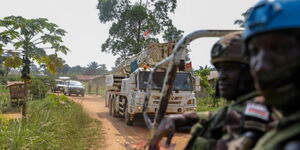
A photo of the Haiti Police Service
Photo
Haiti Times

Haiti police are said to be one of the world's underfunded, understaffed, corrupt, and ill-equipped forces. 

In fact, Haitian police, in early 2023, resorted to demonstrating for their well-being while demanding their grievances be addressed. The officers blocked roads, torched tires across Port-au-Prince and seized vehicles while demanding tougher crackdowns on influential and violent gangs.

They also called an end to Prime Minister Ariel Henry's reign -  an incident that has never been witnessed in Kenya.

Thus, Kenya's decision to deploy 1,000 police officers to quell violence in Haiti and restore law and order was met with mixed reactions. 

Protestors fill the streets of Port-au-Prince, Haiti on July 20, 2023.
Photo
VOA

As the international community led by the United Nations warmly embraced Kenya, human rights activists and security stakeholders condemned what they argued was a controversial and impulsive decision. 

The activists questioned Kenya's preparedness to handle geographical, language and cultural barriers, among other challenges.

With scarce answers and a lack of clarity, the Kenyan government finds itself under pressure to justify why it accepted the UN's plea to send local police to the Caribbean nation, whose economy has collapsed and 60 per cent of the nation's capital, Port-au-Prince, is under the control of criminal gangs.

Questions also arose on whether the Kenyan police can go toe-to-toe and successfully subdue the Haitian gangs that have dominated the nation since the assassination of President Jovenel Moïse in July 2021.

The recent gang-related violence in Haiti forced over 3,000 officers to leave the police service in the past two years, with the officers fearing for their lives. 

Out of this, an estimated 15,498 officers remain on duty, according to a statement released by Francisco Occil, Haiti's police spokesperson, in February 2023.

As apprehension grows regarding whether Kenyan officers will be up to the task, Kenyans.co.ke takes a look at the disparities between the two police services. 

Qualifications

To enrol in the Kenya Police Service, recruits must hold a Kenya National Identity Card, have a minimum qualification of D+ in the KCSE examination, and be between 18 and 28 years old.

They must also be physically, mentally and medically fit and have no pending criminal case.

On the other hand, Haiti police officers are required to appear for an entrance examination to be held at the departmental offices and demonstrate knowledge of general subjects such as Geography, History, Mathematics and writing ability.

The candidates are shortlisted after they prove that they are Haitian citizens between the ages of 18 and 30 years and have a minimum height of between 1.6 metres and 1.67 meters for women and men, respectively.

The candidate should also have a clean criminal record and possess a minimum intellectual level in grade nine exams.

Weapons

There has been a growing concern that Haitian police lack modern equipment and vehicles, hampering their ability to counter criminal activities. 

However, critics counted this perspective, arguing that the officers need a robust government to assert authority and enact better policies rather than purchase more weapons and upgrade the police force. 

The officers are normally equipped with hoods, flak jackets (sleeveless jackets made of heavy fabric reinforced with metal to protect against bullets) and automatic weapons.

In Kenya, the police are supplied with sophisticated guns including Spanish-made CZ Scorpion EVO 3 A1 airsoft rifles, Belgian-made FN SCAR rifles and German-made G3 and MP5 rifles.

Questions, however, linger on whether Kenya's firepower can overpower Haitian gangs who have access to high-powered rifles.

One of the reasons that also led to the rise in the criminal networks in the nation was the infiltration of the gangs within the police service, which was attributed to the government's failure to protect the officers, leaving them outgunned and overpowered.

An armed gang in Haiti.
Photo
PBS

Salary

Low-grade officers in Haiti are paid less than Ksh30,000 a month, leading to the majority reportedly colluding with the gangs to earn a better living.

On the other hand, a newly recruited police officer earns a monthly salary of Ksh21,645, while a long-serving constable gets between Ksh38,975 and Ksh40,354.

The push by the Kenyan government to solve the crisis in Haiti is perceived as a daring move as no other country, including the United States, has in the past been able to contain the situation. 

Over the years, Haitian Prime Minister Henry had requested international military support to aid the government in regaining control of the territory from the gangs, but the Western nations were reluctant.

Months later, Kenya's Foreign Affairs Ministry announced that 1,000 officers would be sent to the nation to assist in battling the criminal gangs. 

The United Nations Security Council ratified the decision. Additionally, the US pledged Ksh14.5 billion for the mission, with Secretary of State Antony Blinken assuring that the Joe Biden administration is keen on ensuring the mission is successful.

Red Cross Advises Kenyans on Safety Ahead of El-Nino

Vehicles navigate a flooded road in Mombasa.
Daily Nation

Kenya Red Cross has advised Kenyans on how to keep safe during heavy flooding, expected during the El-Nino rains.

The Kenya Meteorological Department projected that most parts of the country will receive above average rainfall for the rest of the year.

In anticipation of the floods, 400 households in low-lying areas in Isiolo County have been advised to move to higher ground to avoid losses caused by flooding.

Kenyans are thus on high alert due to the possible disastrous effects of flooding, as witnessed in the late 1990s El-Nino.

Members of the Kenya Red Cross at a past event
Members of the Kenya Red Cross at a past training exercise
Photo
Red Cross

According to a report prepared for the United Nations, the 1997/1998 El-Nino rains caused devastating consequences due to unpreparedness. 

2,000 people died and many more were displaced. Millions of livestock perished from disease, hunger, and drowning.

The rains also caused a massive landslide near Kibwezi market along the Nairobi-Mombasa highway. The landslide damaged about three kilometers of the highway separating Mombasa from the rest of the country. 

At the Mombasa port, loaded containers were submerged in the floods.

Safety During Floods

Communication from the Kenya Red Cross outlines the following measures to help mitigate the effects of flooding:

  • Evacuate immediately to elevated areas in case of flooding
  • Avoid walking or driving through flood waters
  • Do not underestimate the water level. Just six inches of moving water can knock you down. Just one foot of moving water can sweep your vehicle away.
  • Do not drive over a bridge that is flooded
  • Avoid parking or activities along streams and rivers during heavy rainfall
  • Avoid areas with collapsed power lines and muddy waters where power lines may have fallen
  • In a flooded area, use a stick to test the depth
  • Follow information from designated media houses to stay updated on the rains and flooded areas
  • Switch off electricity at the main switch if house is flooded. Disconnect gas supply.
  • Do not go home or to disaster areas until it is declared safe
  • Avoid drinking unsafe water
  • In case of emergency, you can call 1199, the Redcross Emergency Hotline.
A photo of homes destroyed by floods in Joska, Machakos County in December 2019.
Photo
Vinny Radak

How to Apply for Green Card Lottery in Kenya

A photo showing the DV Lottery 2025.
Photo
Le Guide

The US Department of State has opened the annual Diversity Visa (DV) lottery programme, known as the Green Card, for applicants seeking to live and work in the United States.

In a statement, the US Department announced that the program will begin on Wednesday, October 4, and conclude on Tuesday, November 7, 2023.

The State Department will provide 55,000 green card opportunities for foreign citizens in the current programme.

"There is no cost to register for the DV program, but selectees who are scheduled for an interview will be required to pay a visa application fee prior to making their formal visa application, where a consular officer will determine whether they qualify for the visa," read part of the statement.

US embassy, Nairobi
The United States Embassy gate, Nairobi Kenya.
Photo
The US Embassy Kenya

The Department of State will choose the 55,000 applicants randomly through its internal systems. 

Qualifications

Education

All applicants must complete at least 12 years of primary and secondary school education.

This will be similar to a 12-year course in the United States.

No minimum age is required during the application, but the requirement of a high school education or work experience for each applicant for the application will mostly disqualify those who are under the age of 18 years.

Work Experience

Applicants should have at least two years of work experience in the last five years.

The department will use the US Department of Labour's database to determine the qualifying work experience. The database classifies job experience into five job zones.

These are categorised based on education, experience and training levels necessary to perform the job. It is ranked from Job Zone One to Five, where one requires little or no preparation while five requires extensive preparation.

According to the State Department, the job category is required to have a rating of 7.0 or higher.

Passport

All applicants must have a valid passport, as a passport number is required at the time of application. You are required to write your name as it appears on the passport.

"If your passport includes a first, middle and last/family name, please list them in the following order:  last/family name, first name, middle name). If you have only one name, it must be entered in the last/family name field," read part of the statement.

"Only you as the principal applicant must meet these requirements, your spouse and children do not have to meet the requirements."

Eligible Country

The department has listed 53 countries in Africa whose residents can apply for the program. The countries are selected because they have in the past recorded low rates of immigrants into the United States.

However, the department offered an alternative for residents whose countries are not listed on the database if either your spouse or your parents are natives of a country already listed.

How to Apply

Applicants should register online through the US State Department website or visit a cyber. You should carry a passport-size photo, birth certificate or ID and submit the entry electronically on the DV website.

Notably, multiple and incomplete entries will lead to automatic disqualification. Applicants have until September 30, 2024, to check the status of their entry through the State Department's website.

A photo collage showing Kenyans holding an EAC Passport
Photo
Varsity Scope

Safaricom Announces M-Pesa Charges For Ksh250K Transaction Limit

A photo of Safaricom CEO Peter Ndegwa.
Photo
Safaricom

Safaricom on Thursday announced charges for customers who will be sending between Ksh151,000 and Ksh250,000.

For transactions between Ksh150,001 and Ksh250,000, to transfer to registered MPESA users will cost Ksh108. To transfer to unregistered MPESA users will cost Ksh318 and withdrawal will cost Ksh309.

Transfer of similar amounts to Pochi la Baishara and Business Till Number will cost Ksh108.

The Central Bank of Kenya (CBK) recently increased the daily mobile money transaction limit to Ksh500,000 as digital transactions take root in the country. 

An aerial view of Safaricom Headquarters located at Westlands, Nairobi.
Photo
Safaricom

“Safaricom has today increased M-PESA transactions limit to Ksh250,000 for each transaction,” the company announced in a statement.

“The move will see the addition of a new transaction band of Ksh151,000 to Ksh250,000 for Send Money, Lipa Na M-PESA BuyGoods, PayBill and all other transactions.”

Kenya is known to be the home for mobile money transactions, ahead of other African powerhouses as locals ditch cash for safer and faster transactions. 

Over time, the regulator and telcos have reviewed transaction limits to accommodate the growing importance of digital finance in the lives of Kenyans. 

Telcos recently welcomed the move by CBK to review transaction limits, even as State agencies move to improve the safety of mobile transactions in the country.

Safaricom CEO Peter Ndegwa remarked that the increased limit would provide clients with additional convenience and ease of doing business.

Additionally, it would empower customers and businesses to do more using their phones.

A photo of Safaricom CEO Peter Ndegwa.
Photo
Safaricom