SEO Article

8 Common Nairobi Laws You Break Everyday

A photo of Uhuru Park in Nairobi County on June 2023
Photo
Johnson Sakaja

Nairobi consistently features among the top African cities in global rankings.

Despite not being as developed as other global cities like London, Los Angeles, New York, and Tokyo, the city under the sun often holds its own, never seeming out of place alongside elite companies. 

Achieving and maintaining such status necessitates the rigorous enforcement of regulations and laws that govern the behaviour of both residents and visitors exploring the capital city.

Nevertheless, a number of these regulations remain relatively obscure, leading some locals to blatantly violate them in their daily lives. 

What most people don't know is that these laws are clearly spelled out on the official Nairobi County website, nairobi.go.ke.

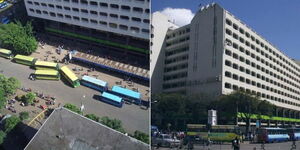
An aerial view of a section of the Nairobi CBD
Photo
Aurimas

When boarding a matatu or bus at the terminus, it's important to observe the stipulated rules, which include forming orderly queues as outlined by the laws. 

Further, it is important to enter the vehicle solely through its designated door. 

Regrettably, such safety measures are sometimes disregarded, particularly by touts and people attempting risky stunts on the road.

Additionally, traveling in an overloaded vehicle is strictly prohibited, and both PSV drivers and passengers who abet the Kenyan habit of sitting in undesignated areas are in violation of this regulation.

Moreover, it is against the rules to engage in spitting or littering while in Nairobi. To facilitate compliance, the county government has installed numerous bins throughout the county for convenient disposal.

In July 2022, the Suitable Waste Management Act was enacted into law under the leadership of former President Uhuru Kenyatta. 

The legislation imposes stringent penalties on individuals failing to properly manage waste. Offenders can face fines ranging from a minimum of Ksh2 million to a maximum of Ksh4 million or a prison sentence lasting not less than four years.

"Any person whose activities generate waste ensures that the waste is transferred to a person who is licensed to transport and dispose of the waste in accordance with the law," reads part of the act.

Further, creating disturbances through street noise is considered an offense in Nairobi, with the regulation also prohibiting the ownership of pets or animals that cause a nuisance to fellow residents.

Additionally, it is against the rules to engage in activities such as playing, riding, or driving on footpaths, a practice sometimes observed among young children.

If you find yourself in Nairobi County and urgently need to use a restroom but can't locate a facility nearby, it's important to refrain from relieving yourself on the street, as this is considered a punishable offense.

Moreover, the act of bargaining or making purchases from street hawkers in undesignated areas is discouraged by the County Government.

Notably, in November 2022, Governor Johnson Sakaja implemented a ban on hawking activities on city footbridges. This decision aimed to mitigate crime within the capital and alleviate congestion on these pedestrian walkways.

"If you want a space for trade, then we will find you one but not in a public utility like footbridges and flyovers," he stated. 

Nairobi Governor Johnson Sakaja speaking on Wednesday July 5, 2023
Nairobi Governor Johnson Sakaja speaking on Wednesday, July 5, 2023.
Photo
Johnson Sakaja

KUCCPS Opens Applications for 5 Open University Courses

Ruto and James Mwangi at Open University
Group Chief Executive Officer of Equity Group Holdings PLC, James Mwangi (Left) shakes President William Ruto's (Right) hand after being appointed Vice Chancellor of the Open University of Kenya's Chancellor on Thursday, August 3, 2023.
Photo
Ministry of Education

Kenya Universities and Colleges Central Placement Service (KUCCPS) has opened applications for five Open University courses.

The application which began on Friday, September 15, is available for all Kenyans who have at least sat for the Kenya Certificate of Secondary Education (KCSE) examinations or done other courses. 

They must also have a minimum of two (2) principal passes in the KCSE English and Mathematics among other subjects.

To apply, applicants must visit the KUCCPS website and create an account. They must then upload their academic transcripts, KCSE certificate, and other supporting documents.

A photo collage of students sitting KCSE exam and a notice indicating that the 2023 KUCCPS application portal is open.
Photo
KUCCPS

The five course enlisted on KUCCPS portal include Bachelor of Technology Education which costs around Ksh115,000 per year while Bachelor of Economics and Statistics costs Ksh105,000 annually.

KUCCPS has also listed Bachelor of Business and Entrepreneurship, Bachelor of Data Science and Bachelor of Science in Cyber Security and Digital Forensics which costs Ksh105,000 per year.

The selected applicants will be enrolled in the Open University of Kenya (OU). The OU is a distance learning university that offers a variety of undergraduate and postgraduate courses.

The courses are taught by qualified lecturers and the learning materials are delivered through a variety of media, including print, audio, and video.

KUCCPS CEO Agnes Mercy Wahome speaks during a career guidance forum held at Kangaru School in Embu County on July 15, 2023.
Photo
KUCCPS

Here are the steps on how to apply for Open University Courses on KUCCPS:

1. Visit the KUCCPS website and create an account.

2. Login to your account and click on the "Apply for Courses" tab.

3. Select the "Open University Courses" option.

4. Select the course you want to apply for.

5. Upload your academic transcripts, KCSE certificate, and other supporting documents.

6. Click on the "Submit Application" button.

Here are the requirements for applying for Open University Courses on KUCCPS:

1. Be a Kenyan citizen.

2. Have a minimum of a KCSE grade or you have done other courses.

How to Appeal HELB Scholarship After Being Denied

Ezekiel machogu
Education Cabinet Secretary Ezekiel Machogu speaking on Wednesday, April 26, 2023.
Photo
Ministry of Education

The Universities Fund has advised students whose applications for government scholarships have been rejected that they still have a chance to get the funding.

In a statement published by Universities Fund on Thursday, September 14, the agency invited students to file appeals, to allow them another chance to secure much needed finances for their higher education.

According to the Universities Fund, the decision to deny students the scholarships could be due to a number of reasons including; an oversight or by mistake on the part of the government officials.

Universities Fund explained that even students who got less money than what they expected could ask the government to review the offer upwards or downwards.

An image of the University of Nairobi (UoN) towers in Nairobi County.
A photo of the University of Nairobi (UoN) towers in Nairobi County.
Kenyans.co.ke

"An individual may appeal or request a review of their Government Student Scholarships award if they were not satisfied with the amount given.

"This includes unsuccessful scholarship applications," Universities Fund explained in a statement.

To appeal for more government scholarship funding on the University Fund Platform, you can follow these steps:

1. Go to https://portal.hef.co.ke/auth/signin portal and log in to your account.

2. In your account, review the application

3. Click on the Appeals tab.

4. Submit your appeal

In the Reason for Appeal field, explain why you need more funding. Be sure to include specific examples of how the additional funding will help you succeed in your studies.

Attach any supporting documents, such as financial statements, academic transcripts, or letters of recommendation.

5. Click on the "Submit" button.

The University Fund Platform will review your appeal and notify you of their decision within a few weeks.

Some tips for writing a successful appeal letter, include the need for the student to be clear and concise. The students should also highlight his or her academic achievements and potential.

Students are also advised to explain why they need the additional funding and how it will help them to succeed in their academic endeavors.

It's important for appellants to be specific and provide evidence to support their claims.

However, Universities Fund has explained that only Kenyan born students are eligible for the government scholarships under the new model.

"The Government Student Scholarship is restricted to Kenyan citizens only. International students should check with their universities, governments or financial aid offices to seek for funding based on their eligibility," the Universities Fund explained.

f
UoN graduates celebrate during the 57th Graduation Ceremony held at the institution's grounds on September 22, 2017.
Photo
UoN

How to Import Omena from Kenya to China

Women dry the fish popularly known as 'omena' on the shores of Lake Victoria in Kisumu County on April 26, 2018.
Daily Nation

Kenya recently exported its first 52-tonne shipment of omena (anchovies) to China. The shipment arrived in the Chinese Hunan Province on Monday, September 11.

Chinese Ambassador to Kenya, Zhou Pingjian, noted that the exportation is a significant milestone for Kenya, especially those living around the lake region.

Omena is a small, oily fish that is popular in Kenya. It is a good source of protein and omega-3 fatty acids. The fish is typically fried or grilled and eaten as a snack or side dish.

The export of omena to China is expected to boost the Kenyan economy. It will create jobs for fishermen and fish processors, and it will also generate foreign exchange earnings.

Buckets filled with Omena fish in Sindo, Homa Bay County, Kenya.

The Chinese Ambassador to Kenya noted that the Chinese market is a large and growing market for fish, and there is a strong demand for omena in China.

Here are the steps on how to export omena from Kenya to China:

1. Obtain the necessary permits and licenses:

Anyone intending to export omena to China will first obtain an export permit from the Kenya Fisheries Service. After which the business person will also seek a phytosanitary certificate from the Kenya Plant Health Inspectorate Service.

The business person also needs to obtain other permits or licenses, depending on the specific requirements of China.

An export permit is a document issued by the government of Kenya that authorizes the export of certain goods. The permit is required for the export of a variety of goods, including dual-use goods, which can be used for both civilian and military purposes.

The application process for an export permit varies depending on the type of goods being exported. However, the general process for omena traders begins with filling a form at Kenya Plant Health Inspectorate Service offices.

The exporter must complete an application form and provide supporting documentation, such as a sales contract, certificate of origin, and phytosanitary certificate.

Apart from KEPHIS, the trader should also consider seeking certification from Kenya Bureau of Standards (KEBS) and the Ministry of Trade and Industry.

2. Find a Chinese importer

Omena traders will have to find Chinese importers through online directories, trade fairs, or other channels.

Once they have found a potential importer, they will need to negotiate a contract that specifies the terms of the sale, such as the price, quantity, and delivery terms.

3. Pack and ship the omena

The omena must be packed and shipped in accordance with the requirements of the Chinese government.

The traders will need to use a reputable shipping company that has experience exporting food products to China.

4. Clear Customs in China

When the omena arrives in China, it will need to be cleared through customs. The importer will be responsible for this process.

5. Make Sure the Omena is of High Quality

The Chinese market is very competitive, so you need to make sure that your product is up to the standards of Chinese consumers.

6. Get the Right Documentation

The Chinese government has strict requirements for imported food products. Make sure that you have all of the necessary documentation in order to avoid delays or problems at customs.

7. Work With a Reputable Shipping Company

A good shipping company will be able to help you navigate the complex export process and ensure that your omena arrives in China safely and on time.

An Image of a cargo clearance officer supervising clearance at Mombasa port
Photo
KPA

10 Places to Visit in Kenya With Ksh2,000

A collage of Thompson Falls, Mombasa Go Kart and Kereita Forest
A collage of Thompson Falls, Mombasa Go Kart, and Kereita Forest
Photo
TripAdvisor/Mombasa Go Kart/Twende Sasa Safaris

Kenya is a top travel destination in Africa and has often ranked higher over the years.

The country has a lot to offer, not only to tourists but also to the locals as well. From the steep snowy mountains to the white sandy beaches in the coastal region.

However, with the tough economic times, Kenyans face the dilemma of choosing between luxury and meeting their basic needs. Despite the challenge, one can unwind in areas that charge affordable fees. 

Kenyans.co.ke looks at cheap places for Kenyans to enjoy nationwide with a budget of approximately Ksh2,000.

A photo of visitors walking in Ngong Hills
Photo
Dew Drop Safaris

Ngong Hills

The seven hills located along the Great Rift Valley, a few kilometres from Nairobi, are suitable for hiking junkies. Visiting the area as a group or couple for support is highly advised.

Besides the fresh air, the visitors get to enjoy the mesmerising wind turbines distributed across the land. The turbines act as road markers for new visitors. 

Excluding hiking, other activities are quad bike riding (Ksh1,000), picnicking, archery(Ksh1,000), bike riding (Ksh500), and ziplining (Ksh1,000).

Ngong Hills is managed by the Kenya Forest Service (KFS), and visitors are charged Ksh232 for adults, Ksh58 for children, Ksh464 for residents (East Africa), Ksh174 for children residents (East Africa), Ksh696 for nonresident adults, and Ksh174 for nonresident children.

Mombasa Go-Kart

Go-karting is a type of racing in which a compact four-wheel unit - go-kart - is used to create an illusion of real-life racing. The sport is gaining popularity in the country, with more areas being set up to meet the increasing demand.

Karting is considered one of the safest, cheapest, and arguably the best avenues into motorsports for those with the desire to compete.

Mombasa Go-Kart and Adventure Park is located along the Mombasa-Malindi Road. Besides go-karting, it offers varying activities for the visitors, inclusive of paintball (Ksh1,500), mini golf (Ksh300), archery (Ksh1,000), bowling (Ksh1,500) and zip lining (Ksh500).

The park charges Ksh1,400 per training session and 10 minutes on the track, Ksh700 for kids up to 12 years, and Ksh2,800 for the fun race program.

Mt Longonot National Park

The mountain, which stands at an altitude of 2,780 metres above sea level, is located in Naivasha, Nakuru County. It is ideal for those seeking to enjoy the outdoors while exercising.

It offers a wide range of activities for visitors, the main one being hiking. Others include game viewing, bike riding, and exploring Lake Naivasha.

The park currently has affordable entrance fees, Ksh300 for adults and Ksh215 for kids. Non-residents are, however, required to pay extra.

Visitors are required to park hiking gear, water, some sunscreen, preferred snacks, and a visor to protect their eyes from the sun. 

Wild Waters 

Wild Waters in Mombasa is an ideal destination for water enthusiasts. 

The colourful slides at the park only add to the fun of a sunny day in the water. The park has a wide swimming pool to accommodate more people, especially during the holidays and weekends.

Wild Waters has various sections, spirals, a kids' pool, a play station, a flume bowl, a rain dance, and multiline & harakiri.

It charges Ksh1,700 for resident swimmers and sliders over two years, Ksh1,900 for non-resident swimmers and sliders over two years, and Ksh300 for non-sliders or swimmers.

An aerial view of swimming pools and slides at wild waters Mombasa
An aerial view of swimming pools and slides in wild waters Mombasa
Photo
wild waters

Karura Forest
Sitting on approximately 2,570 acres, Karura Forest offers city dwellers a serene place to unwind and breathe in the fresh air.

It is home to various tree species that contribute to the ecosystem support of the animals in the forest, including fruit bats, monkeys, and the occasional suni antelopes.

Some of the activities in the forest include walking, bike riding, enjoying the swings, and picnicking.

Most of the activities are free, exclusive of bike riding and picnicking. Visitors are required to pay Ksh500 to hire a bicycle for two hours, Ksh150 for adults, and Ksh100 for children to hold picnics.

The entrance fee is Ksh100 for adults, Ksh for kids, Ksh600 for non-resident adults, and Ksh300 for non-resident kids.

The parking fee ranges between Ksh200 to Ksh1,000, depending on the car's capacity.

Machakos People's Park

Located in Machakos County, the park is among the few places in the country that does not require an entrance fee.

It offers locals and visitors an open, relaxing space as children enjoy various games and other activities. 

Some games for kids include merry-go-rounds, bouncing castles, horse riding, camel riding, and bike riding, among others, all at varying prices.

The wide open areas provide space to walk as a way of exercising. The well-maintained grass and lawns are also perfect for picnics.

Machakos People's Park is well maintained with street lights for night visitors.

Kerieta Forest

Known for the longest zipline in East Africa, Kereita Forest is one of the favourites for travel enthusiasts due to the serene atmosphere and wide array of activities.

Other activities include archery, paintball, mountain biking, footgolf, nature walks, and horse riding all at different prices up to Ksh3,250 for the longest zipline.

The forest is located in Kimende, Kiambu County. Entry charges are Ksh232 for adults and Ksh58 for kids, payable to the Kenya Forest Service (KFS).

A photo of two visitors on the ziplines at Kereita Forest
Photo
twende sasa safaris

Thompson Falls

Located in Nyahuru, Thompson Falls offers a serene environment to relax and enjoy the cool breeze from the rushing water.

Near the falls, visitors can purchase mementos ranging from Maasai accessories and shukas. They can also take photos of the locals dressed in traditional attire.

The charges are affordable, leaving change for food and snacks. The entrance fee is Ksh70 for adults and Ksh30 for children. Noncitizen adults pay Ksh300, while noncitizen children pay Ksh200.

Jump by Flying Fox

The Jump at the Hub Karen brings extreme activities closer for adrenaline junkies. It offers, racing zip lines, airbag jumps, a leap of faith, a climbing wall, a giant swing, and abseiling.

Most of these activities require precaution, and the Jump offers safety gear where necessary. The prices range between Ksh1,000 and Ksh1,500, depending on the activity.

Nairobi National Museum

The Nairobi National Museum offers hundreds of history lessons, from paintings to artifacts that portray the early days of man

In March, the taxidermy of the last male northern white rhino was on display at the museum, adding to the rich culture at the venue.

Located a few minutes from Nairobi Central Business District, the Museum attracts a wide range of visitors seeking to learn.

It charges Ksh200 for adults, Ksh100 for children, Ksh600 for resident adults, and Ksh400 for resident children. Nonresident adults part with Ksh1,200 and Ksh600 for the kids.

Entrance to the Nairobi National Museum.
A photo of the entrance to the Nairobi National Museum.
Photo

3 Taxes & Penalties to Take Effect From September

Finance Bill 2023 Signed into Law
President William Ruto (seated) signs Finance Bill 2023 into Law at State House, Nairobi on Monday, June 26, 2023.
PCS

Three new tax measures are set to take effect from Friday, September 1, in line with the schedule enshrined in the Finance Act ascended to by President William Ruto on June 29.

The new tax measures include Digital Asset tax, Electronic Tax Invoices and Export and Investment Promotion Levy rates on key products such as cement clickers used to manufacture Portland cement.

On the other hand, various tax penalties and rules on tax amnesty will take effect, as detailed below. 

A graphic representing Bitcoin - a form of cryptocurrency.
Photo
iStock

Digital Asset Tax  

The tax targets income derived from the transfer or exchange of digital assets such as cryptocurrencies and is set at 3 per cent.

"A digital asset includes anything of value that is not tangible and cryptocurrencies, token codes, and numbers held in digital form and generated through cryptographic means or otherwise, by whatever name called.

"The owner of a platform or the person who facilitates the exchange or transfer of a digital asset shall deduct the digital asset tax and remit it to the Commissioner.," reads the Act in part.

As per the Act, the taxes will be remitted within five working days after the deduction.

Miscellaneous Fees and Levies

The 2023 Finance Act amended the Miscellaneous Fees and Levies Act, of 2016 and introduced an Export and Investment Promotion Levy on notable goods such as iron, non-alloy steel,  kraft paper (cardboard) and sacks.

The levy is imposed on local manufacturers who export the goods overseas.

As per the schedule, cement clickers used to manufacture Portland cement, Bars and rods of iron or nonalloy steel, will face a levy of 17.5 per cent of the value of the exports.

On the other hand, the Finance Act imposes a levy of 10 per cent on the value of imported kraft paper (cardboard) and sacks.

Electronic Tax Invoices

This tax measure targets business people as they will be required to issue an electronic tax invoice through the system established by the taxman.

Business people will also maintain a record of stocks in the system established by the Kenya Revenue Authority (KRA).

The electronic tax excludes investment allowances, interest, emoluments, imports, airline passenger ticketing and similar payments.

"Where a tax law requires a taxpayer to issue an electronic tax invoice, submit a tax return in electronic form or pay a tax electronically, and the taxpayer fails to comply with that tax law, the Commissioner shall issue a notice in writing to the taxpayer requesting the reasons for the noncompliance.

"Where the reasons given under subsection (1) do not satisfy the Commissioner, the taxpayer shall be liable to a penalty of two times the tax due," read the Act in part.

Kenya Revenue Authority
Kenya Revenue Authority building at Times Towers
Kenyans.co.ke

Tax Amnesty Penalty 

Any person who fails to pay a tax due as of December 31, 2022, by June 30, 2024, will be penalised through interest. Amnesty will also not be granted for the same.

While applying for tax amnesty, one must write to the KRA Commissioner and propose a payment plan for the outstanding amount.

Why Smaller Pieces of Land Cost More in Nairobi

An aerial photo of the Nairobi Expressway section in Westlands shot on June 13, 2023.
Photo
Moja Expressway

The Nairobi Metropolis real estate market shows a paradoxical trend, with smaller parcels of land often sold at higher rates compared to larger ones. 

According to HassConsult Q3 Land Indexes, certain areas in Nairobi witness higher spending on three-quarter acre plots than on one-acre plots. 

Estates like Parklands, Riverside, Upperhill, Westlands and Kileleshwa exhibit this phenomenon. 

For instance, from April to June, a three-quarters acre of land was valued at Ksh467.9 million whereas an acre traded at Ksh403.9 million. However, a quarter of an acre in the same estate was valued at Ksh339 million.

Aerial View of the Westgate Mall and other environs on October 30, 2018
Aerial View of the Westgate Mall and other environs on October 30, 2018.
Photo
AirShare

So, what are the driving forces behind this phenomenon?

Preference of Buyers

Kenyans.co.ke established that preference among potential landowners is one of the driving factors.

Speaking to Kenyans.co.ke on Saturday, August 26 real estate expert Arnania Ogutu, opined that several potential developers in Nairobi often sought to buy smaller pieces of land owing to costs in property development.

He asserted that homeowners often seek smaller pieces of land as they are easier to develop compared to constructing a house on a bigger parcel of land. Smaller land sizes typically require less initial investment and entail reduced construction costs.

Homebuyers often weigh the expenses associated with building and maintaining a property as an attractive option in terms of affordability. 

Notably, with the increasing construction costs that have been witnessed in the last few months owing to the increased production costs of materials, homeowners are seeking cheaper options.

Therefore, prices rise with increased demand for the smaller pieces of land. 

"Some of those seeking to buy the land will definitely choose a smaller piece of land because they are easy to develop and the cost of construction will definitely be lower compared to that of a large piece of land. This could be a contributing factor to this trend," he stated.

Photo of the real estate apartments owned by Cheriez Properties Limited in Kitengela.
Photo
Cheriez Properties Limited

Scarcity 

Increased demand for small land prices leads to scarcity of the said parcels. Automatically, when a scarce product - in this case, land- is in high demand- prices will automatically go up.

On the other hand, some estates have seen smaller pieces of land sold completely, leading to the availability of large trucks of land above one acre.

Location

According to Ogutu, locations with better infrastructure, such as roads, malls, and schools, drive up prices for smaller land parcels compared to larger land in less developed areas. 

"Everybody will only look for land where there is a road and other key infrastructure because of accessibility. This will obviously lead to an increase in the demand," Ogutu explained.

Sakina Hassanali, the Head of Development, Consulting and Research at HassConsult, a realtor, concurred with Ogutu, adding that infrastructural projects such as the Nairobi Expressway and other key infrastructure were driving the cost of land.

“Land pricing is a function of its development potential. Therefore, land in areas with strict development density guidelines tends to have a price ceiling while land in areas that are subject to less rigidity around the densities tends to increase in pricing in tandem with the approved density,”  Hassanali stated in the Q3 report.

A photo of a section of Nairobi's Upperhill estate taken on May 4, 2020.
A photo of a section of Nairobi's Upper Hill estate taken on May 4, 2020.
Photo
Washington Mito

Millions of Kenyans Are Spending to buy Land in Nairobi in 20 2023

Upper Hills holds the record for the most expensive acre of land in Nairobi, valued at Ksh478 million, followed by Westlands at Ksh452 million. 

Other highly valued areas include Parklands (Ksh403 million), Kilimani(396 million), Riverside (Ksh320 million), Kileleshwa (Ksh293 million), Gigiri (Ksh231 million) Lavington (Ksh225 million), Muthaiga (Ksh213 million) and Nyari (Ksh110 million.

Common Fruits Whose Seed You Didn't Know Are Toxic

A photo of several fruits on display at a local market
Photo
Terry Ngari

Fruits and vegetables are widely regarded as nutritious staples, credited with the potential to ward off various illnesses. 

The age-old adage, "An apple a day keeps the doctor away," basically highlights the importance of consuming fruits daily to boost immunity. 

However, unbeknownst to many, some seeds of various fruits like apples can lead to fatality if consumed in larger quantities despite the appealing fleshy, juicy and sweet exterior. 

The Rose Family 

An undated image showing apples
A photo of several apples in a basket after harvesting
Photo
Oxfarm

Apple seeds contain a compound known as amygdalin, which forms part of its natural defensive mechanism. The compound degrades into hydrogen cyanide (HCN) if accidentally chewed in larger quantities.

Research published in the journal of the Association of Analytical Communities, also known as AOAC International, in April 2023 indicates that amygdalin is a cyanogenic glycoside, a natural toxin found in seeds.

AOAC International brings together government, industry, and academia to establish standard methods of analysis that ensure the safety and integrity of foods and other products impacting public health worldwide.

Another research conducted by the World Health Organization (WHO) titled Safety Evaluation of Certain Food Additives and Contaminants, explains that excess consumption of hydrogen cyanide may lead to fatality. 

"Acute toxic effects result primarily from inhibition of cellular respiration and consequent histotoxic anoxia, which can eventually lead to death," reads part of the research.

Notably, histotoxic anoxia transpires when a toxic substance (or substances) interfere with the brain's capacity to utilize oxygen. 

Often, this compound is found in seed fruits in the rose family comprising apples, apricots, peaches, almonds, and cherries.

Accidental consumption of these seeds may result in cyanide poisoning, with symptoms including anxiety, dizziness, and confusion.

The severity of the effects depends on the amount of seeds consumed. It is also dependent on the consumer's weight and type of apple ingested. 

If swallowed whole, the seed may pass through the digestive tract and excreted without harm. For utmost caution, especially for children, removing the seeds before consumption is highly recommended. 

Cassavas 

Notably, even though cassava lacks visible seeds, the potentially harmful compound is present. Overconsumption can lead to cyanide poisoning and other neurological disorders. 

Scientists underscore that oils and juices derived from these fruits may contain minimal amygdalin content. 

Other fruits

Plums, even though considered by some scientists as a fruit comprising cyanogenic glycosides, it is relatively lower compared to other fruits. 

Remember to discard the seeds when enjoying these fruits in the future to enjoy a wholesome and safe experience. 

A photo of several stone fruits, peaches, plums and berries.
Photo
alvarez

How New Varsity Fees Will Burden Students With Loans

Students getting services at HELB offices
A photo of students getting services at HELB offices
Photo
HELB

The government has released the fees that new varsity students will be required to pay in the revised model per university per course. 

While some students will not be required to pay anything, they will be required to get student loans to cover the difference, which could push more Kenyans into debt amid unemployment.  

The ministry has maintained that the new funding model will increase student admission to universities and ease financial pressure on the institutions that are currently struggling with mounting debt and pending bills. 

The model classifies students into vulnerable, extremely needy, needy, and less needy. It allows students to access scholarships and loans from the billions set aside by the government.

Education CS Ezekiel Machogu speaking during the 46th Annual Conference of the Kenya Secondary Heads Association (KESSHA) at Sheikh Zayed Hall in Mombasa on Wednesday, June 28, 2023.
Photo
Ministry of Education

The vulnerable are those with no household income, the extremely needy are those with a Ksh23,671 household income per month, the needy have between Ksh23,672 and Ksh70,000 per month and the less needy have a household income of between Ksh70,001 and Ksh200,000 per month.

To determine the level of need, the Higher Education Loans Board (HELB) Means Testing Instrument shall be applied.

This test will consider, parent's background, gender, course type, previous school type, expenditure on education, family size and composition, marginalisation, and disability.

"The total funding requirement for the New Funding Model is Ksh 39.4 billion for the Financial Year 2023/2024. To support this Model, the Government has already increased resources by Ksh 12.5 billion this Financial Year. The current funding gap of Ksh 18.6 billion will be provided during Supplementary 1 of the Financial Year 2023/2024," reads a statement from the ministry.

Students have up to September 7 to apply for loans and scholarships or risk being locked out. They can apply through the official website hef.co.ke as applications are free.

The verification process takes seven days, one day for funds to be allocated and then disbursed based on opening dates.

As of August 23, 2023 applications have continued to come through, there were 75,272 successful applications for university and TVET students.

MOE expects 140,107 university students and 145,060 TVET students to apply before the time lapses.

University Students

The households of the vulnerable and extremely needy students will not contribute anything. Students who qualify for university admission are those who attained a minimum grade of C-.

The vulnerable will receive 82 per cent in scholarships and 18 per cent in loans while the extremely needy will receive 70 per cent in scholarships and 30 per cent in loans.

On the other hand, the needy will receive 53 per cent in scholarships, and 40 per cent in loans, and the family will pay 7 per cent.

The less needy will receive a 38 per cent scholarship, and a 55 per cent loan, and the family will pay 7 per cent.

Kenyans Embed URL


TVET students

Learners from vulnerable homes will receive an 80 per cent scholarship and a 20 per cent loan, while the extremely needy will receive a 70 per cent scholarship and a 30 per cent loan.

The needy students will get a 50 per cent scholarship and, a 30 per cent loan, and the family will pay 20 per cent while the less needy will get a 32 per cent scholarship and a 48 per cent loan, and the family will pay 20 per cent.

The government has put more emphasis on students joining TVET institutions to get hands-on skills and be employed to create employment for themselves.

Kenyans Embed URL

Under the new funding model, students will also get upkeep depending on their level of need. They will get between Ksh13,600 and Ksh60,000 also based on whether they are in universities or TVETs.

Meanwhile, the amount a student will get also depends on the course. Below is an illustration of fee variation in five courses from different universities.

Bachelor's Degree in Medicine

Kenyans Embed URL

Bachelor's Degree in Law 

Kenyans Embed URL

Bachelor's Degree in Education

Kenyans Embed URL

Bachelor's Degree in Arts

Kenyans Embed URL

Bachelor's Degree in Commerce 

Kenyans Embed URL

How Much it Costs to Become a Ship Captain in Kenya

Marine Pilot Elizabeth Marami on a ship alongside other crew members
Photo
Elizabeth Marami

Even as unemployment rates in Kenya continue to spike and graduates continue to lament about lack of opportunities in the job market, there are several rewarding careers that are often overlooked by students.

One example is in the sailing industry. There are courses that can lead to great, long-lasting jobs for young Kenyans. 

However, the problem is that students usually don't explore these options. This can be attributed to a lack of comprehensive information or apprehensions as students prefer to stick to what they think is safe and popular.

One job that's often overlooked is being a ship captain. Not many people get to have this job.

While many of these professionals find employment in foreign countries, the Kenya National Shipping Line (KNSL) is working to expand opportunities for aspiring ship captains within the country.

A container ship docked at the Port of Mombasa on Monday April 17, 2023
A container ship docked at the Port of Mombasa on Monday, April 17, 2023.
Photo
KPA

Another reason why this course is undersubscribed is lack of sensitisation and proper guidance on what the course is all about.

This is made worse by the fact that in most cases, students who have just completed high school pursue careers recommended to them by family which might not necessarily be their own preferred option.

This article will focus on the step-by-step process an individual goes through to become a successful sea captain in Kenya.

Academic Qualifications

To become a ship captain, young professionals are required to undertake a Bachelor of Science Degree in Nautical Science from an accredited institution. 

The Bandari Maritime Academy (BMA) offers this program. The curriculum focuses on nurturing essential mathematical, analytical, and problem-solving proficiencies.

Completing the Nautical Studies Module 1 Diploma demands about a year's commitment. However, for a comprehensive learning experience, the full-time course spans three years. The cost for each module is approximately Ksh140,000.

As a prerequisite, prospective students to score a minimum grade of C-.

Students have the option to enroll in a craft certificate program in Nautical Sciences, spanning two years and costing Ksh125,000 per module. 

Eligibility requires a minimum grade of D plain. Examinations are overseen by both the Kenya Maritime Authority and the Kenya National Examinations Council (KNEC).

Another pathway involves becoming a cadet and undergoing an 18-month training period on board a ship, followed by subsequent courses at the Maritime Academy. 

Additionally, the Indian Ocean Maritime Training Centre (IOMTC) offers internationally recognised boat handling qualifications, being an overseas Royal Yachting Association (UK) training center.

These steps are just the initial phases of the long journey towards becoming a ship captain. 

The overarching process spans 12 years, progressing through various classes from Class Four (first) to Class One (final). 

Each class level necessitates six months of coursework accompanied by a substantial commitment to gaining practical sea experience. 

The rigorous journey ensures that aspiring ship captains are thoroughly prepared to undertake the responsibilities synonymous with commanding a vessel.

A photo of the entrance at the Bandari Maritime Academy (BMA)
A photo of the entrance at the Bandari Maritime Academy (BMA) in Mombasa
Photo
Bandari Maritime Academy

The whole journey requires a good grasp of Maths, Physics, and Geography. 

Other required skills include; discipline, problem-solving, physical strength in case of threats, and willingness to learn.

A potential disqualifying factor in this sector is colour blindness, as ship captains heavily rely on colour-coded signals.

Salary & Perks

Captain Davis Mule, a former Navy Ship captain, in a previous interview, highlighted the significant advantages of a shipboard career. 

Apart from the convenience of onboard accommodations, ship captains have the unique privilege of exploring new locations and interacting with diverse cultures.

"When working at sea, the salary is good. You do not pay taxes, you don't pay rent or have personal expenditures.

In the United States, for instance, the average annual salary for a ship captain stands at about Ksh11.8 million, contingent on the work location. 

Notably, according to Cruise Critic, a cruise ship captain garners an average annual income of Ksh21.7 million. 

It's worth noting that this remuneration is dispensed in US dollars, further stressing the appeal of the position.

A ship arriving at the Port of Mombasa on Monday April 17, 2023
A ship arriving at the Port of Mombasa on Monday, April 17, 2023.
Photo
KPA